Hey there! As a supplier of Al Alloy Rings, I often get asked about the tensile strength of these nifty products. So, let's dive right in and have a chat about what the tensile strength of an Al Alloy Ring really means.
First off, what's tensile strength? Well, it's basically the maximum amount of pulling force a material can handle before it breaks or starts to deform permanently. Think of it like a tug - of - war. If you've got an Al Alloy Ring and you start pulling on it from both ends, the tensile strength tells you just how hard you can pull before things go south.
Now, aluminum alloys are a popular choice for making rings for a bunch of reasons. They're lightweight, corrosion - resistant, and can be easily cast into different shapes. But the tensile strength of an Al Alloy Ring can vary quite a bit depending on a few key factors.
One of the main factors is the specific alloy composition. There are tons of different aluminum alloys out there, each with its own unique mix of elements. For example, some alloys might have copper, magnesium, or silicon added to them. These additional elements can have a big impact on the ring's tensile strength. Alloys with more copper tend to have higher strength, but they might also be a bit more brittle. On the other hand, alloys with magnesium can offer a good balance of strength and ductility.
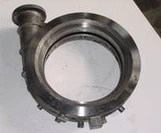
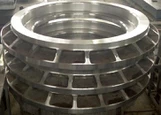
The manufacturing process also plays a huge role. When we're making Al Alloy Rings, we use Al Alloy Casting techniques. The way the molten aluminum alloy is poured, cooled, and solidified can affect the internal structure of the ring. If the cooling process is too fast, it can lead to internal stresses and a lower tensile strength. But if we control the cooling rate just right, we can create a more uniform and stronger structure.
Heat treatment is another important step. After casting, we can heat - treat the Al Alloy Rings to improve their mechanical properties. Heat treatment can involve processes like annealing, quenching, and tempering. Annealing helps to relieve internal stresses and make the alloy more ductile. Quenching, on the other hand, can increase the hardness and strength of the ring. And tempering is used to reduce the brittleness that might be introduced during quenching.
Let's talk numbers for a bit. The tensile strength of Al Alloy Rings can range anywhere from around 100 MPa (megapascals) to over 500 MPa. For basic aluminum alloys used in general - purpose applications, you might see a tensile strength in the 100 - 200 MPa range. These are great for applications where you need a lightweight and corrosion - resistant ring, but don't require extremely high strength.
However, if you're looking for High Strength Al Alloy Casting, we can produce rings with tensile strengths of 300 MPa or more. These high - strength rings are perfect for applications where they'll be under a lot of stress, like in automotive engines or aerospace components.
When it comes to testing the tensile strength of our Al Alloy Rings, we use specialized equipment. We take a sample ring and put it in a tensile testing machine. The machine slowly applies a pulling force to the ring until it breaks. During this process, we measure the force applied and the amount of deformation that occurs. This data allows us to calculate the tensile strength of the ring.
It's also important to note that the tensile strength isn't the only thing we consider when evaluating the quality of an Al Alloy Ring. We also look at other properties like yield strength, elongation, and hardness. Yield strength tells us the point at which the ring starts to deform permanently under stress. Elongation measures how much the ring can stretch before it breaks. And hardness gives us an idea of how resistant the ring is to wear and indentation.
So, if you're in the market for Al Alloy Rings, it's crucial to understand your specific requirements. Are you looking for a lightweight ring for a decorative application? Or do you need a high - strength ring for a heavy - duty industrial use? Based on your needs, we can recommend the right alloy composition and manufacturing process to ensure you get a ring with the optimal tensile strength.
At our company, we've got years of experience in producing top - quality Al Alloy Rings. We use the latest technology and strict quality control measures to make sure every ring we supply meets or exceeds industry standards. Whether you need a small batch of custom - made rings or a large - scale production run, we've got you covered.
If you're interested in learning more about our Al Alloy Rings or have any questions about tensile strength or other properties, don't hesitate to reach out. We're always happy to have a chat and help you find the perfect solution for your project. Contact us today to start the conversation and let's work together to get you the best Al Alloy Rings for your needs.


References
- "Aluminum Alloys: Structure and Properties" by John E. Hatch
- "Metals Handbook: Properties and Selection: Nonferrous Alloys and Pure Metals" by ASM International