Super alloy castings are widely used in various industries due to their excellent high - temperature strength, corrosion resistance, and other superior properties. However, cracking is a common and troublesome problem in the production and application of super alloy castings. As a super alloy casting supplier, I'd like to share some effective methods to prevent the cracking of super alloy castings.
Understanding the Causes of Cracking in Super Alloy Castings
Before we discuss prevention methods, it's crucial to understand the root causes of cracking. There are mainly three types of cracking: hot cracking, cold cracking, and reheat cracking.
Hot cracking usually occurs during the solidification process of the casting. When the alloy is in the semi - solid state, the shrinkage stress generated during solidification exceeds the strength of the semi - solid structure, leading to cracking. Factors such as improper alloy composition, high pouring temperature, and uneven cooling rate can contribute to hot cracking.
Cold cracking appears after the casting has completely solidified and cooled to room temperature. It is often related to residual stress, hydrogen embrittlement, and the presence of hard and brittle phases in the material. Residual stress can be caused by uneven cooling, improper heat treatment, or machining operations.
Reheat cracking occurs when the casting is reheated during subsequent heat treatment or service at high temperatures. It is mainly due to the precipitation of brittle phases and the relaxation of residual stress at elevated temperatures.
Preventive Measures for Hot Cracking
Alloy Composition Control
The composition of the super alloy has a significant impact on its hot cracking susceptibility. As a supplier, we carefully select the raw materials and strictly control the alloying elements. For example, adding a proper amount of elements such as titanium (Ti), zirconium (Zr), and boron (B) can refine the grain structure and improve the hot ductility of the alloy. These elements can form fine precipitates that inhibit the growth of grain boundaries and enhance the strength of the semi - solid structure, reducing the risk of hot cracking.
We also ensure that the content of harmful elements such as sulfur (S) and phosphorus (P) is minimized. Sulfur can form low - melting - point sulfides at the grain boundaries, which weaken the grain boundary strength and increase the tendency of hot cracking. By using high - quality raw materials and advanced refining processes, we can reduce the sulfur and phosphorus content to an acceptable level.
Pouring Process Optimization
The pouring temperature and speed are critical factors in preventing hot cracking. A high pouring temperature increases the shrinkage rate of the alloy during solidification, which can lead to excessive stress and cracking. We determine the appropriate pouring temperature based on the specific alloy composition and casting design. Generally, a lower pouring temperature within the allowable range is preferred, as it reduces the solidification time and the shrinkage stress.
The pouring speed should also be carefully controlled. A too - fast pouring speed can cause turbulence in the mold cavity, which may introduce gas and oxide inclusions and create local stress concentrations. On the other hand, a too - slow pouring speed may result in premature solidification and incomplete filling of the mold. We use advanced pouring systems and simulation software to optimize the pouring process and ensure a smooth and stable filling of the mold.
Cooling Rate Control
Uneven cooling is one of the main causes of hot cracking. To ensure a uniform cooling rate, we design the mold with proper insulation and cooling channels. Insulation materials can be used to slow down the cooling rate of the casting in certain areas, while cooling channels can be placed in critical regions to increase the cooling rate where necessary.
We also use controlled cooling methods such as air cooling, water quenching, or a combination of both, depending on the specific requirements of the casting. By controlling the cooling rate, we can reduce the thermal stress generated during solidification and minimize the risk of hot cracking.
Preventive Measures for Cold Cracking
Residual Stress Relief
Residual stress is a major contributor to cold cracking. After the casting is formed, we use heat treatment processes to relieve the residual stress. Annealing is a commonly used method, where the casting is heated to a specific temperature and held for a certain period of time to allow the stress to relax. The annealing temperature and time are determined based on the alloy composition and the size of the casting.
In addition to annealing, we also use mechanical methods such as shot peening and vibration stress relief. Shot peening can introduce compressive stress on the surface of the casting, which counteracts the tensile stress and reduces the risk of cracking. Vibration stress relief uses high - frequency vibrations to redistribute the residual stress in the casting.


Hydrogen Embrittlement Prevention
Hydrogen embrittlement can cause cold cracking in super alloy castings. Hydrogen can be introduced during the melting, pouring, and heat treatment processes. To prevent hydrogen embrittlement, we use dry raw materials and protect the alloy from moisture during storage and handling. We also use degassing processes during melting to remove the dissolved hydrogen in the alloy.
In the heat treatment process, we ensure that the atmosphere is dry and free of hydrogen. If necessary, we can use vacuum heat treatment or inert gas protection to prevent hydrogen absorption by the casting.
Preventive Measures for Reheat Cracking
Heat Treatment Optimization
The heat treatment process plays a crucial role in preventing reheat cracking. We develop a suitable heat treatment schedule based on the alloy composition and the application requirements of the casting. The heat treatment should be designed to avoid the precipitation of brittle phases and to relieve the residual stress without causing excessive grain growth.
For example, a two - stage aging treatment can be used for some super alloys. The first stage is carried out at a relatively high temperature to dissolve the coarse precipitates and homogenize the alloy structure. The second stage is performed at a lower temperature to promote the precipitation of fine and stable strengthening phases. This process can improve the high - temperature strength and toughness of the alloy and reduce the risk of reheat cracking.
Stress Relief Before Reheating
Before reheating the casting for subsequent processes or service, we ensure that the residual stress is relieved. This can be achieved through annealing or other stress - relief methods. By reducing the residual stress, we can minimize the relaxation of stress at elevated temperatures and prevent the formation of cracks.
Quality Control and Inspection
As a super alloy casting supplier, we implement a strict quality control system to ensure the quality of our products. We use non - destructive testing methods such as ultrasonic testing (UT), radiographic testing (RT), and magnetic particle testing (MT) to detect any potential cracks in the castings. These testing methods can detect internal and surface cracks at an early stage, allowing us to take corrective measures before the casting is delivered to the customer.
We also conduct mechanical property testing, including tensile testing, hardness testing, and impact testing, to ensure that the castings meet the specified requirements. By continuously monitoring the quality of our products, we can improve our manufacturing processes and prevent cracking problems.
Conclusion
Preventing the cracking of super alloy castings is a complex but essential task. By understanding the causes of cracking and implementing appropriate preventive measures in alloy composition control, pouring process optimization, heat treatment, and quality control, we can significantly reduce the cracking rate and improve the quality and reliability of our super alloy castings.
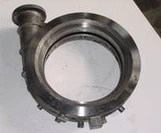
At our company, we are committed to providing high - quality Super Alloy Casting products. Our Super Alloy Casting Pump Body is a prime example of our dedication to quality and innovation. If you are interested in our super alloy casting products or have any questions about preventing cracking, please feel free to contact us for procurement and negotiation. We look forward to serving you and meeting your specific needs.
References
- Davis, J. R. (Ed.). (2000). Superalloys: A technical guide. ASM International.
- Sims, C. T., Stoloff, N. S., & Hagel, W. C. (Eds.). (1987). Superalloys II. Wiley - Interscience.
- Zhang, Y., & Liaw, P. K. (2017). High - entropy alloys: A critical review. Materials Science and Engineering: R: Reports, 113, 1 - 93.