

Copper Alloy Casting
Our goal is to become your true partner in the field of aluminum alloy casting in China. SRIF is engaged in the R&D, promotion and production of new foundry materials, processes, techniques and equipment. The factory has accumulated rich manufacturing experience. Our company is committed to applying advanced manufacturing technology and strict quality control standards to every product. The price is competitive and the product is quality-assured, which is a good choice for your long-term cooperation.
Why Choose Us
Product Application
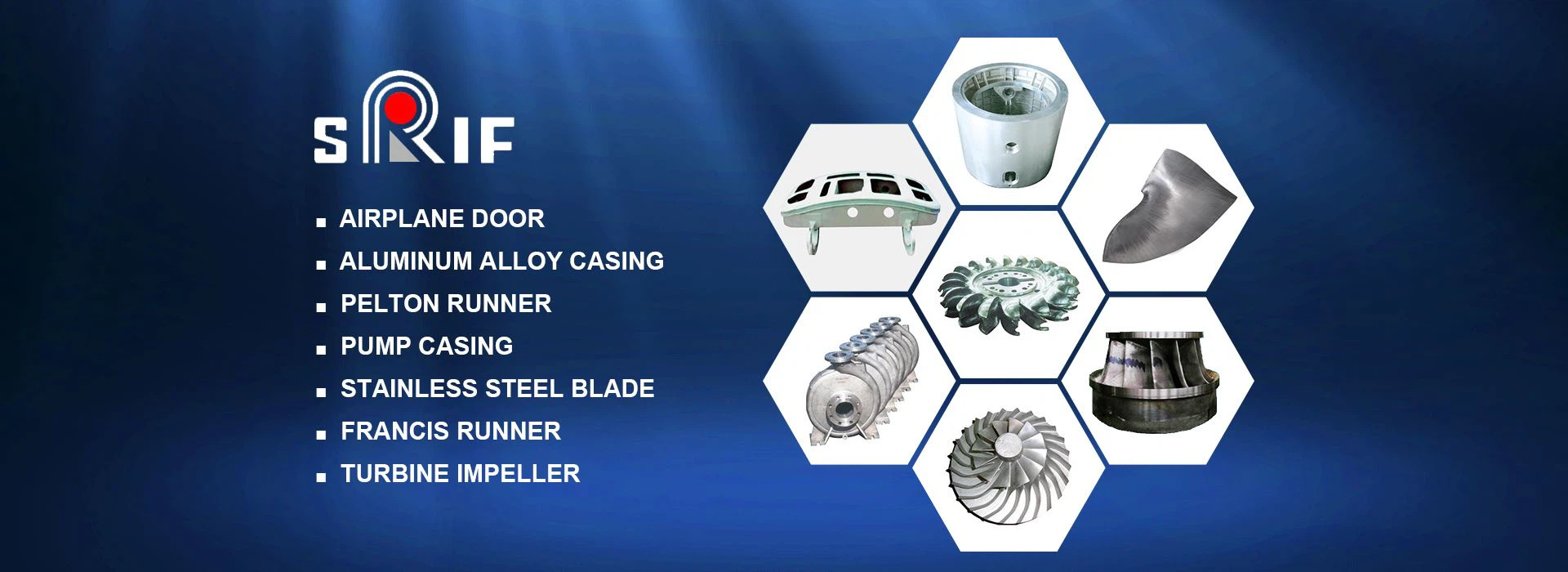
SRIF specializes in the production of special steel castings, electro-slag remelting castings, aluminum alloy castings and so on. Our high-quality castings are widely applied in the development of airspace and aerospace equipment, and construction of hydraulic power stations at home and abroad. We boast a complete range of quality management systems.
Our Team
SRIF have are 519 employees at SRIF including over 200 technical staffers, 144 researchers and senior engineers, 124 doctors and masters, together with a number of foundry academic leaders.
Our Service
The company has a professional sales team to provide you with high-quality pre-sales consulting services. During the order production process, customers can communicate with us at any time to understand the production progress. At the same time, we provide high-quality after-sales service to meet the different needs of customers.
-
 Cu Alloy Valve BodySRIF specializes in the production of special steel castings, electro-slag remelting castings,Add to Inquiry
 -
 Cu Alloy Sleeve by Centrifugal Casting• Low pressure casting process: the low pressure casting machine for Copper is developed by SRIF,Add to Inquiry


- Tel: +86-024-25872276
- Fax: +86-024-25872276
- Email: srif@chinasrif.com
- Add: 17 South Yunfeng Street, Tiexi District, Shenyang P.R. China
Advantages of Copper Alloy Casting
Corrosion Resistance: Perhaps the best known and most valuable quality of copper is this: Typically speaking, copper does not corrode. Copper alloy casting creates parts that have long life spans even in environments with highly caustic chemicals and gasses.
High Conductivity: Aside from silver, copper is the best metal for conducting both heat and electricity. For this reason, you find copper alloy used in a wide variety of both residential and industrial settings. Copper alloy casting creates parts commonly used in wiring and electronics, as well as household kitchenware, such as pots and flatware.
Resistance To Biofouling: “Biofouling” refers to the problems that arise from marine organisms growing on submerged materials. Copper is naturally resistant to this and repels algae and barnacles without the need for additional coating.
Strength Retention And Mechanical Versatility: Pure copper is well known for its softness and malleability, meaning that it is typically used more for its conductive qualities than for its durability. However, there are many copper alloys that rival even-tempered steel in terms of their strength and mechanical applications.
Excellent Machinability And Ease Of Fabrication: Almost all copper alloys can be machined easily, making the production of copper alloy cast parts remarkably easy and efficient.
Copper alloy casting have been extensively used in marine and offshore applications. In marine applications, copper alloy casting are popular materials for tubes, pumps, and valves, thanks to their corrosion resistance. Copper alloy casting are protected by a layer of film and therefore can resist corrosion in seawater. The same corrosion resistance can also protect offshore equipment susceptible to damage by the atmospheric zone.
Copper alloy casting are also ideal for parts subject to a corrosive environment. Brass, phosphor bronze, and aluminum bronze are often used to produce machinery or vehicle parts, requiring wear and corrosion resistance. Common components based on copper alloy casting include bushes, fluid bearings, worm gears, worm wheels, nuts, gears, seals, slide boards, rings, shaft sleeves, bearing housings, and rotor housings. Copper alloy based parts and gears are often used in machinery, such as pressing machines, injection molding machines, grinding machines, and index plates.
Copper has superb conductivity and therefore is a popular material in manufacturing electrical applications such as cables, bus bars, transformer windings, motor stators, and motor rotors. However, copper alloy casting’ conductivity might be slightly compromised because of the addition of other alloying metals.
Types of Copper Alloy Casting

Bronze Casting: Bronze casting involves the use of copper alloys that contain a significant amount of tin, along with other elements like aluminum, manganese, or zinc. This type of casting is known for its strength, durability, and resistance to wear and corrosion.
Brass Casting: Brass casting utilizes copper alloys that contain zinc as the main alloying element. This type of casting offers excellent machinability, corrosion resistance, and attractive aesthetics.
Copper-nickel Casting: Copper-nickel casting involves the use of copper alloys with a significant nickel content, typically ranging from 10% to 30%.
Aluminum Bronze Casting: Aluminum bronze casting utilizes copper alloys with a high aluminum content, typically ranging from 5% to 12%. This type of casting offers excellent strength, wear resistance, and thermal conductivity.
Silicon Bronze Casting: Silicon bronze casting involves the use of copper alloys with a significant silicon content, typically ranging from 2% to 4%. This type of casting offers excellent fluidity, corrosion resistance, and high strength.
Phosphor Bronze Casting: Phosphor bronze casting utilizes copper alloys with a small amount of phosphorus, typically ranging from 0.1% to 0.35%. This type of casting offers excellent strength, wear resistance, and fatigue resistance.
Nickel Silver Casting: Nickel silver casting involves the use of copper alloys with a significant nickel content, typically ranging from 10% to 45%. This type of casting offers attractive silver-like appearance, excellent corrosion resistance, and good mechanical properties.
Gunmetal Casting: Gunmetal casting utilizes copper alloys that contain tin, zinc, and lead in various proportions. This type of casting offers excellent machinability, corrosion resistance, and low friction properties.

Precautions for Use Copper Alloy Casting
Regular Inspection
Conduct periodic inspections to identify any signs of wear, damage, or corrosion.
01
Cleaning and Corrosion Prevention
Clean castings regularly and apply appropriate corrosion prevention measures.
02
Lubrication
Apply lubricants to moving parts to reduce friction and prevent premature wear.
03
Heat Treatment and Stress Relief
Perform heat treatment processes to improve the mechanical properties and relieve internal stresses.
04
Avoiding Mechanical Damage
Handle copper alloy castings with care to avoid scratches, dents, or other forms of mechanical damage.
05
The Manufacturing Process of Copper Alloy Casting
Pattern Creation: The first step in copper alloy casting is creating a pattern, which serves as a replica of the desired component. This pattern is typically made from wood, metal, or plastic.
Mold Preparation: Once the pattern is ready, a mold is created around it. The mold can be made of various materials, such as sand, plaster, or ceramic. The mold is designed to accommodate the molten copper alloy and create the desired shape of the final product.
Melting And Pouring: The next step involves melting the copper alloy. Depending on the specific alloy, the melting process May vary. Once the alloy reaches the desired temperature, it is poured into the mold through a gating system.
Cooling And Solidification: After pouring, the molten copper alloy begins to cool and solidify within the mold. This process can take varying amounts of time, depending on the size and complexity of the component.
Removal And Finishing: Once the copper alloy has solidified, the mold is removed, revealing the newly cast component. The component May undergo further finishing processes, such as trimming, grinding, or polishing, to achieve the desired final appearance and dimensions.
Packaging and Shipping of Copper Alloy Casting
|
Shipping |
Air, Land, Sea |
|
Packing |
Cardboard packaging+reinforced cardboard packaging placed on a pallet |
FAQ
As one of the most professional copper alloy casting manufacturers and suppliers in China, we're featured by premium investment castings with competitive price. Please rest assured to buy high quality customized copper alloy casting from our factory. Contact us for quotation.
Special Steel Casting, Cu Alloy Sleeve By Centrifugal Casting, Cu Alloy Valve Body