Hey there! As a supplier of copper alloy casting, I've seen firsthand how crucial riser design is in the casting process. Risers play a vital role in ensuring the quality of copper alloy castings, and in this blog, I'll be sharing some of the common riser designs that we use.
What Are Risers and Why Do We Need Them?
Before we dive into the different riser designs, let's quickly talk about what risers are and why they're important. A riser, also known as a feeder, is an extra reservoir of molten metal attached to the casting. Its main job is to supply additional metal to the casting as it solidifies. This is crucial because as the molten copper alloy cools and solidifies, it shrinks. Without a riser, the shrinkage would lead to voids, porosity, and other defects in the final casting.
Common Riser Designs
Open Risers
Open risers are probably the simplest and most commonly used riser design. As the name suggests, these risers are open to the atmosphere. They're typically placed on top of the casting, and the molten metal in the riser is exposed to air.
One of the main advantages of open risers is that they're easy to design and implement. They also allow for easy observation of the metal level during the casting process. However, open risers can lose heat quickly, which means they may solidify before the casting does. This can reduce their effectiveness in feeding the casting.
Blind Risers
Blind risers, on the other hand, are completely enclosed within the mold. They're connected to the casting by a small channel, and the molten metal in the riser is not exposed to air.
Blind risers have several advantages over open risers. Since they're enclosed, they lose heat more slowly, which means they can remain molten for longer and provide a more consistent supply of metal to the casting. They also reduce the risk of oxidation and contamination of the molten metal. However, blind risers are more difficult to design and implement, and it can be challenging to monitor the metal level in them.
Insulated Risers
Insulated risers are a variation of open or blind risers that are designed to reduce heat loss. They're typically made by adding an insulating material around the riser, such as ceramic fiber or insulating board.
The main advantage of insulated risers is that they can significantly extend the solidification time of the molten metal in the riser. This allows them to provide a more effective supply of metal to the casting, even in complex or large castings. However, insulated risers can be more expensive than other types of risers, and the insulating material may need to be replaced after each casting.
Heated Risers
Heated risers are another option for ensuring a consistent supply of molten metal to the casting. These risers use external heating sources, such as electric heaters or gas burners, to keep the molten metal in the riser at a high temperature.
Heated risers are particularly useful for large or complex castings that require a long solidification time. They can also be used in situations where the casting material has a high shrinkage rate. However, heated risers are more complex and expensive to install and operate than other types of risers.
Choosing the Right Riser Design
So, how do you choose the right riser design for your copper alloy casting? Well, there are several factors to consider.
First, you need to think about the size and shape of the casting. Larger and more complex castings may require more sophisticated riser designs, such as insulated or heated risers. Smaller, simpler castings may be able to use open or blind risers.
You also need to consider the type of copper alloy you're using. Different alloys have different shrinkage rates, which can affect the effectiveness of the riser design. For example, alloys with a high shrinkage rate may require larger or more efficient risers.
Finally, you need to think about your production process and budget. Some riser designs, such as heated risers, can be more expensive to install and operate than others. You need to balance the cost of the riser design with the quality and performance of the final casting.
Our Experience with Riser Designs
At our company, we've had a lot of experience with different riser designs for copper alloy casting. We've found that the best approach is to work closely with our customers to understand their specific needs and requirements.


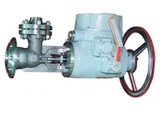
For example, we recently worked on a project to cast Cu Alloy Valve Body. The valve body was a complex shape with a high shrinkage rate, so we decided to use insulated risers to ensure a consistent supply of molten metal to the casting. The result was a high-quality valve body with minimal defects.
Another project involved casting Cu Alloy Sleeve by Centrifugal Casting. For this project, we used blind risers, which were able to provide a reliable supply of metal to the casting while reducing the risk of oxidation and contamination.
Conclusion
In conclusion, riser design is a critical aspect of copper alloy casting. By choosing the right riser design, you can ensure the quality and performance of your castings. Whether you're using open risers, blind risers, insulated risers, or heated risers, it's important to consider the size and shape of the casting, the type of copper alloy, and your production process and budget.
If you're interested in learning more about our copper alloy casting services or have any questions about riser design, please don't hesitate to reach out. We'd be happy to discuss your project and help you find the best solution for your needs. Let's work together to create high-quality copper alloy castings!
References
- Campbell, J. (2003). Castings. Butterworth-Heinemann.
- Flemings, M. C. (1974). Solidification Processing. McGraw-Hill.
- Kou, S. (2003). Welding Metallurgy. Wiley.