Hey there! I'm in the business of supplying Ti Alloy Casting, and today I wanna chat about the corrosion - resistance properties of different titanium alloy castings. Titanium alloys are pretty amazing materials, and their corrosion resistance is one of the key factors that make them so popular in various industries.
Let's start with the basics. Titanium itself has a natural tendency to form a thin, protective oxide layer on its surface when exposed to oxygen. This oxide layer acts as a barrier, preventing further oxidation and corrosion. But different titanium alloys have different compositions, and these compositions can significantly affect their corrosion - resistance properties.
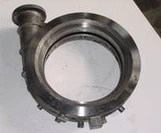
One of the most commonly used titanium alloys is Ti - 6Al - 4V. This alloy contains 6% aluminum and 4% vanadium. It's known for its excellent strength - to - weight ratio and good corrosion resistance. In many mild to moderately corrosive environments, Ti - 6Al - 4V can hold up really well. For example, in marine applications where the alloy is exposed to saltwater, this alloy forms a stable oxide layer that protects it from the corrosive effects of chloride ions. The aluminum in the alloy helps to strengthen the oxide layer, while the vanadium contributes to the overall mechanical properties of the alloy. We often supply Ti Alloy Pump Casing made from Ti - 6Al - 4V for marine pumping systems. These pump casings need to withstand the harsh conditions of saltwater, and Ti - 6Al - 4V does a great job in this regard.
Another interesting titanium alloy is Ti - 3Al - 2.5V. This alloy has a lower aluminum and vanadium content compared to Ti - 6Al - 4V. It has good formability and is often used in applications where the part needs to be shaped easily. In terms of corrosion resistance, it's also quite good. It can resist corrosion in many chemical environments, especially those that are mildly acidic or alkaline. For instance, in some chemical processing plants, Ti Alloy Impeller made from Ti - 3Al - 2.5V are used. These impellers are exposed to various chemicals during the process, and the alloy's corrosion - resistant properties ensure a long service life.


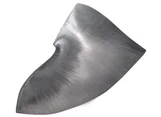
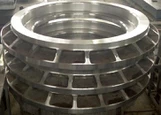
Then there's the Ti - 5Al - 2.5Sn alloy. This alloy contains aluminum and tin, and it's known for its high - temperature strength and good corrosion resistance in both oxidizing and reducing environments. At high temperatures, the aluminum in the alloy forms a protective alumina layer, which provides excellent resistance to oxidation. In reducing environments, the tin helps to maintain the stability of the oxide layer. We've supplied Large Ti Alloy Casting made from Ti - 5Al - 2.5Sn for aerospace applications. In aerospace, parts need to withstand extreme conditions, including high temperatures and corrosive gases, and this alloy fits the bill perfectly.
Now, let's talk about some factors that can affect the corrosion resistance of titanium alloy castings. The first one is the surface finish. A smooth surface finish can enhance the corrosion resistance of the alloy. When the surface is rough, there are more areas where corrosion can start. For example, if there are small pits or scratches on the surface, these can act as sites for corrosion initiation. So, we always make sure to provide our titanium alloy castings with a proper surface finish to maximize their corrosion resistance.
The environment also plays a crucial role. Different environments have different levels of corrosiveness. For example, a highly acidic environment with a low pH can be more corrosive to titanium alloys compared to a neutral environment. Chloride - rich environments, like saltwater, can also be quite challenging for the alloys. In these cases, the chloride ions can penetrate the oxide layer and cause pitting corrosion. However, as I mentioned earlier, many titanium alloys are able to form a stable oxide layer that can resist the attack of chloride ions to a certain extent.
The heat treatment of the titanium alloy castings can also impact their corrosion resistance. Proper heat treatment can improve the microstructure of the alloy, which in turn can enhance its corrosion - resistant properties. For example, some heat treatment processes can make the oxide layer more uniform and stable, providing better protection against corrosion.
In addition to the common titanium alloys I've mentioned above, there are also some specialty titanium alloys that are designed for specific, extremely corrosive environments. For example, some alloys are developed to resist the corrosion of highly concentrated acids or strong oxidizing agents. These specialty alloys often have unique compositions with the addition of elements like molybdenum, nickel, or copper. These elements can modify the properties of the oxide layer and make the alloy more resistant to specific types of corrosion.
When it comes to choosing the right titanium alloy for a particular application, it's important to consider all these factors. You need to think about the environment in which the casting will be used, the mechanical properties required, and the cost. Sometimes, a more expensive alloy with better corrosion resistance might be the best choice if the application is in a very harsh environment. Other times, a more common alloy like Ti - 6Al - 4V might be sufficient for a less corrosive application.
As a Ti Alloy Casting supplier, we have a lot of experience in helping our customers choose the right alloy for their needs. We understand the importance of corrosion resistance in different applications, and we're committed to providing high - quality titanium alloy castings that can meet the requirements of our customers. Whether you need a small Ti Alloy Impeller or a large Large Ti Alloy Casting, we've got you covered.
If you're in the market for titanium alloy castings and are concerned about their corrosion - resistance properties, don't hesitate to get in touch with us. We can have a detailed discussion about your specific requirements and recommend the most suitable alloy for your application. We're here to make sure you get the best titanium alloy castings that will serve you well in your projects.
References:
- ASM Handbook, Volume 2: Properties and Selection: Nonferrous Alloys and Special - Purpose Materials
- Titanium: A Technical Guide by John R. Davis