

What is the minimum wall thickness of Al Alloy Castings?
As a supplier of aluminum alloy castings, I've encountered numerous inquiries from clients regarding the minimum wall thickness of these castings. This is a crucial aspect as it impacts not only the manufacturing process but also the functionality and cost - effectiveness of the final product. In this blog, I'll delve into the factors influencing the minimum wall thickness of aluminum alloy castings and share some industry insights.
Factors Affecting the Minimum Wall Thickness
Alloy Properties
Different aluminum alloys have distinct fluidity characteristics. Fluidity refers to the ability of the molten alloy to flow into the mold cavity during the casting process. Alloys with better fluidity can fill thinner sections of the mold more easily. For example, alloys with a higher silicon content, such as A356, generally have good fluidity. This allows for the production of castings with relatively thinner walls compared to alloys with lower fluidity. When the fluidity is poor, the molten metal may not reach all parts of the mold, resulting in incomplete filling or cold shuts, which are defects caused by the premature solidification of the metal before it has fully filled the cavity.
Casting Process
The casting process plays a significant role in determining the minimum wall thickness. There are several common casting methods for aluminum alloy castings, including sand casting, die casting, and investment casting.
- Sand Casting: This is a relatively traditional and cost - effective method. However, due to the nature of the sand mold, which has a relatively high thermal resistance, the molten metal cools more slowly. As a result, the minimum wall thickness for sand - cast aluminum alloy parts is typically larger, usually around 3 - 5 mm. If the wall thickness is too thin, the metal may solidify before completely filling the mold, leading to casting defects.
- Die Casting: Die casting involves injecting molten metal into a steel die under high pressure. This process allows for a much faster filling of the mold and better control over the casting dimensions. Die - cast aluminum alloy parts can have a minimum wall thickness as thin as 0.5 - 1 mm. The high pressure helps the molten metal to flow into narrow spaces, enabling the production of complex and thin - walled components. For instance, many electronic device housings made of aluminum alloy are die - cast with thin walls to reduce weight and improve portability.
- Investment Casting: Also known as lost - wax casting, this process uses a wax pattern that is coated with a ceramic shell. The wax is then melted out, and the molten metal is poured into the ceramic mold. Investment casting can achieve very fine details and relatively thin walls. The minimum wall thickness for investment - cast aluminum alloy parts can be around 1 - 2 mm. This method is often used for producing high - precision and intricate components, such as turbine blades.
Design Considerations
The design of the casting itself can also limit the minimum wall thickness. Features such as sharp corners, undercuts, and complex geometries can make it difficult for the molten metal to flow smoothly. Sharp corners, for example, can cause the molten metal to slow down or even stop flowing, increasing the risk of defects. Therefore, designers often need to incorporate fillets and rounded edges to improve the metal flow. Additionally, if the casting has internal features like ribs or bosses, these need to be designed in a way that does not impede the filling of the thin - walled sections.
Practical Applications and Examples
In the automotive industry, aluminum alloy castings are widely used for engine components, transmission cases, and suspension parts. For engine blocks, which are typically produced by sand casting, the minimum wall thickness is carefully designed to balance strength, weight, and heat transfer. A typical minimum wall thickness for an engine block might be around 4 - 6 mm. This ensures that the block can withstand the high pressures and temperatures generated during engine operation while keeping the weight relatively low.
In the aerospace sector, where weight reduction is of utmost importance, die - cast and investment - cast aluminum alloy parts are commonly used. For example, Al Alloy Ring components used in aircraft landing gear or wing structures may have very thin walls to reduce weight without sacrificing strength. These rings can be die - cast with a minimum wall thickness of less than 1 mm, allowing for significant weight savings in the overall aircraft design.
The electronics industry also benefits from thin - walled aluminum alloy castings. Al Alloy Upper Casing for laptops, tablets, and smartphones are often die - cast to achieve a sleek and lightweight design. The minimum wall thickness of these casings can be as thin as 0.5 - 1 mm, providing both protection for the internal components and an aesthetically pleasing appearance.
Importance of Maintaining the Right Wall Thickness
Maintaining the appropriate minimum wall thickness is crucial for several reasons. Firstly, it ensures the structural integrity of the casting. If the wall is too thin, the casting may not be able to withstand the mechanical stresses it will encounter during its service life, leading to premature failure. Secondly, it affects the cost of production. Thinner walls generally require more precise casting processes and may increase the scrap rate if not properly controlled. On the other hand, overly thick walls can result in unnecessary material usage, increasing the weight and cost of the final product.

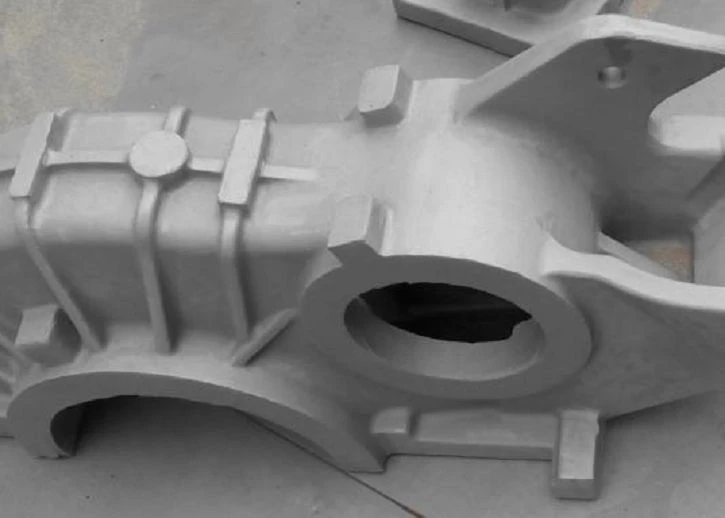
Determining the Minimum Wall Thickness for Your Project
When working on a project that requires aluminum alloy castings, it's essential to consult with an experienced casting supplier. At our company, we have a team of experts who can analyze your specific requirements, including the alloy type, casting process, and design features. We can use advanced simulation software to predict the metal flow and identify potential issues with thin - walled sections. By collaborating closely with you, we can determine the optimal minimum wall thickness that meets your performance, cost, and quality requirements.
If you're interested in Alluminum Alloy Casting for your project, whether it's a small - scale prototype or a large - scale production run, we're here to assist you. Our state - of - the - art facilities and experienced workforce ensure that we can produce high - quality aluminum alloy castings with the right wall thickness for your application. We invite you to reach out to us to discuss your project in detail and explore how we can provide the best casting solutions for you.
References
- Campbell, J. (2003). Castings. Butterworth - Heinemann.
-ASM Handbook Committee. (2008). ASM Handbook Volume 15: Casting. ASM International. - Whelan, M. J. (2012). Aluminum Castings. Springer.


