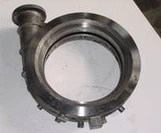
In the dynamic landscape of manufacturing, aluminum alloy casting technology has witnessed remarkable advancements in recent years. As a leading supplier of aluminum alloy casting products such as Al Alloy Ring and Large Al Alloy Casting, we are at the forefront of these emerging trends. This blog post will explore the key trends shaping the future of aluminum alloy casting technology and how they impact our business and customers.
1. Precision Casting and Near - Net Shape Manufacturing
One of the most significant trends in aluminum alloy casting is the pursuit of greater precision and near - net shape manufacturing. Traditional casting processes often require extensive machining after casting to achieve the desired dimensions and surface finish. However, with the development of advanced casting techniques, it is now possible to produce parts that are very close to the final shape, reducing material waste and machining time.
Investment casting, for example, has seen significant improvements in mold making and casting processes. High - resolution 3D printing is being used to create wax patterns with intricate details, which are then used to produce ceramic molds. This allows for the production of complex aluminum alloy parts with tight tolerances. These precision - cast parts are in high demand in industries such as aerospace, automotive, and medical, where lightweight and high - strength components are essential.
As a supplier, we have invested in state - of - the - art precision casting equipment and technologies. Our ability to produce Alluminum Alloy Casting with high precision gives us a competitive edge in the market. We can offer our customers parts that meet their exact specifications, reducing their overall production costs and lead times.
2. Advanced Simulation and Modeling
Simulation and modeling have become indispensable tools in aluminum alloy casting technology. By using computer - aided engineering (CAE) software, foundries can predict the behavior of molten aluminum during the casting process, including filling, solidification, and cooling. This helps to identify potential defects such as porosity, shrinkage, and hot tears before the actual casting is made.
Advanced simulation software can also optimize the gating and riser design, which is crucial for ensuring proper filling and feeding of the mold. By simulating different gating and riser configurations, foundries can determine the most efficient design that minimizes defects and maximizes the yield of good castings.
In addition to process simulation, material modeling is also becoming more important. With the development of new aluminum alloys, it is necessary to understand their mechanical and physical properties under different casting conditions. Material modeling can help to predict the microstructure and properties of the cast parts, allowing for better control of the final product quality.
At our company, we use advanced simulation and modeling software to optimize our casting processes. This enables us to produce high - quality aluminum alloy castings with a high degree of consistency. We can also provide our customers with detailed process reports and predictions, helping them to make informed decisions about their casting requirements.
3. Sustainable Casting Practices
Sustainability is a growing concern in the manufacturing industry, and aluminum alloy casting is no exception. There is an increasing demand for more environmentally friendly casting processes and materials.
One of the key areas of focus is the reduction of energy consumption. New melting and casting technologies are being developed to reduce the amount of energy required to melt and cast aluminum alloys. For example, induction melting furnaces are more energy - efficient than traditional gas - fired furnaces, as they can heat the aluminum more quickly and with less heat loss.
Recycling of aluminum scrap is also an important aspect of sustainable casting. Aluminum is a highly recyclable material, and recycling aluminum requires only a fraction of the energy needed to produce primary aluminum. Many foundries are now implementing closed - loop recycling systems, where scrap aluminum from the casting process is collected, melted, and reused in new castings.
In addition to energy and material efficiency, reducing emissions is also a priority. New dust and fume collection systems are being installed in foundries to capture and treat pollutants generated during the casting process. This helps to reduce the environmental impact of the casting operations.
As a responsible supplier, we are committed to sustainable casting practices. We have implemented energy - efficient melting and casting equipment, and we have a comprehensive recycling program in place. Our sustainable approach not only benefits the environment but also helps us to reduce our production costs and meet the growing demand from environmentally conscious customers.
4. Development of New Aluminum Alloys
The development of new aluminum alloys is another important trend in aluminum alloy casting technology. New alloys are being designed to meet the specific requirements of different industries, such as higher strength, better corrosion resistance, and improved heat resistance.
For example, in the automotive industry, there is a growing demand for lightweight aluminum alloys with high strength - to - weight ratios. These alloys can be used to replace heavier steel components, reducing the weight of the vehicle and improving fuel efficiency. In the aerospace industry, aluminum alloys with high heat resistance are needed for components that are exposed to high temperatures during flight.


Researchers are also exploring the use of alloying elements and heat treatment processes to improve the properties of aluminum alloys. By adding small amounts of alloying elements such as magnesium, silicon, and copper, the mechanical and physical properties of the alloys can be significantly enhanced. Heat treatment processes such as solution treatment and aging can further improve the strength and hardness of the cast parts.
As a supplier, we keep a close eye on the development of new aluminum alloys. We work closely with our customers to understand their specific requirements and offer them the most suitable alloy options. Our in - house research and development team is also involved in the testing and evaluation of new alloys, ensuring that we can provide our customers with the latest and best - performing materials.
5. Automation and Robotics in Casting
Automation and robotics are increasingly being used in aluminum alloy casting processes to improve productivity, quality, and safety.
In the melting and pouring operations, automated systems can precisely control the amount of molten aluminum being poured into the mold, reducing the risk of over - or under - filling. These systems can also operate continuously, increasing the production rate and reducing the labor intensity.
Robotic systems are also being used for mold handling, cleaning, and finishing operations. Robots can perform repetitive tasks with high precision and consistency, improving the quality of the cast parts. They can also work in hazardous environments, such as near hot furnaces or in areas with high levels of dust and fumes, reducing the risk of injury to human workers.
In addition to production operations, automation is also being used in quality control. Automated inspection systems can use non - destructive testing techniques such as X - ray and ultrasonic testing to detect internal defects in the cast parts. These systems can quickly and accurately identify defective parts, allowing for timely rejection and rework.
At our company, we have invested in automation and robotics to improve our casting processes. Our automated melting and pouring systems ensure consistent and accurate casting, while our robotic handling and inspection systems improve the quality and efficiency of our operations.
Conclusion
The emerging trends in aluminum alloy casting technology are shaping the future of the industry. Precision casting, advanced simulation, sustainable practices, new alloy development, and automation are all driving the evolution of this field. As a leading supplier of aluminum alloy casting products, we are committed to staying at the forefront of these trends.
We understand that our customers' needs are constantly evolving, and we are dedicated to providing them with the highest - quality aluminum alloy castings that meet their specific requirements. Whether you are in the aerospace, automotive, medical, or any other industry, we have the expertise and technology to produce the perfect casting for you.
If you are interested in our Al Alloy Ring, Large Al Alloy Casting, or Alluminum Alloy Casting products, we invite you to contact us for a detailed discussion about your casting needs. We look forward to working with you to develop innovative solutions for your business.
References
- Campbell, J. (2003). Castings. Butterworth - Heinemann.
- Davis, J. R. (Ed.). (2001). Aluminum and Aluminum Alloys. ASM International.
- Flemings, M. C. (1974). Solidification Processing. McGraw - Hill.