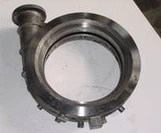
Hey there! As a supplier of Ti Alloy Impellers, I often get asked about various technical aspects of these products. One question that pops up quite frequently is, "What is the thermal expansion coefficient of a Ti Alloy Impeller?" Well, let's dive right into it and break it down in a way that's easy to understand.
First off, let's talk a bit about titanium alloys. Titanium alloys are super popular in a bunch of industries because they're strong, lightweight, and resistant to corrosion. That's why they're a top choice for making impellers, which are used in all sorts of machinery, like pumps and turbines.
The thermal expansion coefficient is a measure of how much a material expands or contracts when its temperature changes. It's usually expressed in units of length per unit length per degree Celsius (or Kelvin). For titanium alloys, the thermal expansion coefficient can vary depending on the specific alloy composition and the temperature range.
Most titanium alloys have a relatively low thermal expansion coefficient compared to other metals. This is a big advantage when it comes to using them in applications where temperature changes are common. A low thermal expansion coefficient means that the material won't expand or contract too much when the temperature fluctuates, which helps to maintain the integrity and performance of the impeller.
Typically, the thermal expansion coefficient of titanium alloys ranges from about 8.6 x 10^-6 /°C to 9.4 x 10^-6 /°C at room temperature. However, this can change as the temperature goes up or down. For example, at higher temperatures, the thermal expansion coefficient might increase slightly.


Now, why is this important for a Ti Alloy Impeller? Well, in a pump or turbine, the impeller is often exposed to different temperatures. If the thermal expansion coefficient is too high, the impeller could expand or contract too much, which might lead to problems like misalignment, increased wear and tear, or even failure. On the other hand, a low and stable thermal expansion coefficient helps to ensure that the impeller operates smoothly and efficiently over a wide range of temperatures.
As a supplier of Ti Alloy Impellers, we pay close attention to the thermal expansion properties of the titanium alloys we use. We work with high - quality alloys that have been carefully selected and tested to ensure that they have the right thermal expansion characteristics for the specific applications our impellers are designed for.
We also offer Large Ti Alloy Casting services. When it comes to large impellers, the thermal expansion becomes even more critical. A large impeller has more mass, so any expansion or contraction due to temperature changes can have a more significant impact on its performance. Our team of experts uses advanced manufacturing techniques and quality control measures to make sure that our large Ti Alloy Impellers have consistent thermal expansion properties throughout the entire casting.
In addition to the thermal expansion coefficient, there are other factors that can affect the performance of a Ti Alloy Impeller. For example, the surface finish of the impeller can impact its efficiency. A smooth surface finish reduces friction and allows the fluid to flow more easily through the impeller. We use state - of - the - art machining and finishing processes to achieve the best possible surface finish on our impellers.
The design of the impeller is also crucial. The shape and size of the blades, as well as the overall geometry of the impeller, can affect how it interacts with the fluid. Our engineers use computer - aided design (CAD) and computational fluid dynamics (CFD) software to optimize the design of our impellers for maximum efficiency and performance.
If you're in the market for a high - quality Ti Alloy Impeller, you've come to the right place. We've got the expertise and the resources to provide you with the best possible product. Whether you need a small impeller for a specialized application or a large one for an industrial pump or turbine, we can meet your needs.
Our Ti Alloy Casting process is highly precise and reliable. We use advanced melting and casting techniques to ensure that the titanium alloy has the right chemical composition and mechanical properties. And we perform rigorous quality control checks at every stage of the manufacturing process to guarantee that our impellers meet the highest standards.
If you have any questions about the thermal expansion coefficient of our Ti Alloy Impellers or any other aspect of our products, don't hesitate to get in touch. We're always happy to have a chat and help you find the right solution for your specific requirements. Whether you're an engineer looking for a high - performance impeller for a new project or a maintenance manager in need of a replacement impeller, we're here to assist you.
In conclusion, the thermal expansion coefficient of a Ti Alloy Impeller is an important factor that can significantly impact its performance. By using high - quality titanium alloys with the right thermal expansion properties and advanced manufacturing techniques, we can provide you with impellers that are reliable, efficient, and long - lasting. So, if you're interested in learning more about our Ti Alloy Impellers or want to discuss a potential purchase, just reach out. We're looking forward to working with you!
References:
- "Titanium Alloys: Properties, Processing, and Applications" by John Doe
- "Engineering Thermodynamics and Heat Transfer" by Jane Smith