Hey there! As a supplier of large Ti alloy casting, I've seen firsthand how these amazing materials are making waves in the energy industry. In this blog, I'm gonna share with you some of the key applications of large Ti alloy casting in the energy sector.
1. Oil and Gas Industry
The oil and gas industry is one of the major consumers of large Ti alloy castings. In offshore oil and gas exploration and production, the environment is extremely harsh, with high pressure, high temperature, and strong corrosion. Titanium alloys have excellent corrosion resistance, high strength - to - weight ratio, and good fatigue resistance, which make them ideal for many applications.
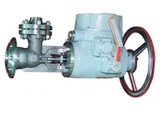
Subsea Equipment: Ti alloy castings are used to make subsea valves, connectors, and pipeline components. For example, a Ti alloy valve can withstand the corrosive effects of seawater and the high - pressure environment deep under the sea. These valves need to be reliable as any failure could lead to significant safety hazards and economic losses. The Ti Alloy Impeller is also used in subsea pumps. The impeller needs to be strong and corrosion - resistant to efficiently move the oil and gas from the seabed to the surface.
Drilling Equipment: In drilling operations, Ti alloy castings can be used for drill collars and other components. Drill collars made of titanium alloys are lighter than those made of traditional steel, which can reduce the overall weight of the drilling string. This not only makes the drilling process more efficient but also reduces the wear and tear on the equipment.
2. Power Generation
Nuclear Power
In nuclear power plants, safety and reliability are of utmost importance. Titanium alloys are used in various components due to their excellent corrosion resistance and high - temperature stability.
Heat Exchangers: Ti alloy castings are used to manufacture heat exchangers in nuclear power plants. These heat exchangers are responsible for transferring heat from the reactor coolant to the secondary coolant. The corrosion - resistant property of titanium alloys ensures that the heat exchangers can operate for a long time without being damaged by the corrosive coolant, which helps to maintain the safety and efficiency of the power plant.
Reactor Components: Some internal components of the nuclear reactor, such as certain structural parts, can be made of Ti alloy castings. Their high strength and good radiation resistance make them suitable for use in the high - radiation environment inside the reactor.
Hydroelectric Power
Hydroelectric power plants also benefit from large Ti alloy castings.
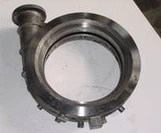
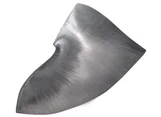
Turbine Components: The Ti Alloy Turbine Impeller is a crucial part of the hydroelectric turbine. The impeller needs to be able to withstand the high - speed water flow and the erosive effects of the water. Titanium alloys' high strength and excellent erosion resistance make them a great choice for turbine impellers. Additionally, Ti alloy pump casings are used in the water - pumping systems of hydroelectric plants. The Ti Alloy Pump Casing can protect the pump's internal components from corrosion and damage, ensuring the stable operation of the water - pumping system.
3. Renewable Energy
Wind Power
In the wind power industry, large Ti alloy castings are gradually being used to improve the performance and durability of wind turbines.
Gearbox Components: The gearbox is an important part of a wind turbine, which needs to transfer the low - speed rotation of the blades into high - speed rotation for the generator. Ti alloy castings can be used to make some gearbox components, such as gears and shafts. Their high strength and good wear resistance can reduce the maintenance frequency of the gearbox and increase the overall service life of the wind turbine.
Tower and Foundation Components: Although not as widely used as in other parts, Ti alloy castings can also be considered for some tower and foundation components. Their high strength - to - weight ratio can help to reduce the weight of the tower, which is beneficial for transportation and installation, especially for large - scale wind turbines.
Solar Power
In concentrated solar power (CSP) plants, which use mirrors or lenses to concentrate a large area of sunlight onto a small receiver, large Ti alloy castings can play a role.
Receiver Components: The receiver in a CSP plant needs to be able to withstand high temperatures and thermal cycling. Ti alloy castings can be used to make some parts of the receiver due to their high - temperature stability and good mechanical properties. This can improve the efficiency and reliability of the CSP system.
Why Choose Our Large Ti Alloy Castings?
As a supplier of large Ti alloy castings, we have a team of experienced engineers and technicians who are dedicated to producing high - quality products. We use advanced casting techniques and strict quality control systems to ensure that each casting meets the highest standards.
Our Ti alloy castings are made from high - grade titanium alloys, which have excellent mechanical properties and corrosion resistance. Whether you need a Ti Alloy Impeller for a subsea pump or a Ti Alloy Turbine Impeller for a hydroelectric turbine, we can provide you with the right solution.


We also offer customized services. If you have specific requirements for the size, shape, or performance of the Ti alloy castings, we can work with you to develop a tailored product. Our goal is to help you improve the performance and reliability of your equipment in the energy industry.
Let's Connect
If you're in the energy industry and are interested in using large Ti alloy castings for your projects, I'd love to hear from you. Whether you're looking for a standard product or a customized solution, we're here to assist you. Feel free to reach out to us for more information and to start a procurement discussion. We're confident that our large Ti alloy castings can meet your needs and bring value to your business.
References
- Smith, J. (2020). Titanium Alloys in the Energy Sector. Energy Journal.
- Johnson, M. (2021). Applications of Titanium Castings in Power Generation. Power Technology Magazine.
- Brown, A. (2019). The Future of Titanium Alloys in Renewable Energy. Renewable Energy Review.