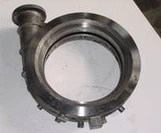
Hey there! As a supplier of Ti Alloy Pump Casing, I often get asked whether our product can be used in cryogenic environments. Well, let's dig into this topic and find out.
First off, let's understand what cryogenic environments are. Cryogenic conditions typically refer to extremely low temperatures, usually below -150°C (-238°F). These environments are found in various industries, such as aerospace, where liquid oxygen and liquid hydrogen are used as rocket propellants; and in the medical field, for storing biological samples in liquid nitrogen at around -196°C (-321°F).
Now, let's talk about titanium alloy. Titanium alloys are known for their excellent combination of high strength, low density, and good corrosion resistance. But how do they perform in the cold?
One of the key properties we need to consider is the ductility of the material at low temperatures. Ductility is the ability of a material to deform under tensile stress without breaking. Some materials become brittle at cryogenic temperatures, which can lead to sudden and catastrophic failure. However, many titanium alloys maintain good ductility even at extremely low temperatures.
For example, Ti - 6Al - 4V, one of the most commonly used titanium alloys, has been shown to have reasonable toughness and ductility at cryogenic temperatures. This means that our Ti Alloy Pump Casing made from such alloys can withstand the stresses associated with the expansion and contraction that occurs during temperature changes in cryogenic systems.
Another important aspect is the coefficient of thermal expansion. In cryogenic environments, the large temperature differences can cause significant thermal stresses if the material has a high coefficient of thermal expansion. Titanium alloys generally have a relatively low coefficient of thermal expansion compared to some other metals. This property helps to reduce the thermal stresses within the pump casing, minimizing the risk of cracking or deformation.
When it comes to corrosion resistance, titanium alloys are a top choice. In cryogenic applications, where there may be exposure to cryogenic fluids and potentially corrosive substances, the ability of the pump casing to resist corrosion is crucial. Titanium forms a passive oxide layer on its surface, which provides excellent protection against corrosion, even in harsh cryogenic environments.
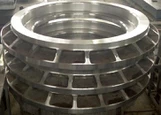
Now, let's take a look at some of the related products in our titanium alloy portfolio. If you're interested in other titanium alloy components, we also offer Ti Alloy Turbine Impeller. These impellers are designed to work efficiently in high - performance systems, and they share the same excellent properties of titanium alloys as our pump casings.


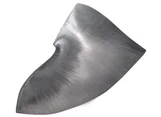
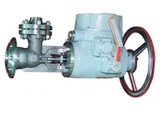
We also have Ti Alloy Aerospace Investment Castings. These castings are used in aerospace applications where the combination of light weight and high strength is essential. And for valve applications, we provide Ti Alloy Valve, which offers reliable performance in various fluid control systems, including those in cryogenic environments.
In terms of manufacturing, our Ti Alloy Pump Casing is produced using advanced casting and machining techniques. We ensure strict quality control throughout the production process to guarantee that each pump casing meets the highest standards. Our experienced engineers and technicians are constantly working on improving the design and performance of our products to better suit the needs of cryogenic applications.
However, it's important to note that the suitability of our Ti Alloy Pump Casing for a specific cryogenic environment also depends on other factors. The type of cryogenic fluid, the operating pressure, and the frequency of temperature cycling all play a role. For example, if the cryogenic fluid contains certain impurities or has a high level of reactivity, it may require additional considerations in terms of material selection and surface treatment.
We recommend that before using our Ti Alloy Pump Casing in a cryogenic environment, you consult with our technical team. We can provide detailed technical advice based on your specific application requirements. Our team has extensive experience in dealing with cryogenic applications and can help you determine the best solution for your project.
In conclusion, based on the properties of titanium alloys such as good ductility, low coefficient of thermal expansion, and excellent corrosion resistance, our Ti Alloy Pump Casing can indeed be used in cryogenic environments. But as with any engineering application, careful consideration of all relevant factors is necessary.
If you're interested in purchasing our Ti Alloy Pump Casing or any of our other titanium alloy products for your cryogenic projects, don't hesitate to reach out. We're here to provide you with high - quality products and professional technical support. Let's start a conversation about how we can meet your needs!
References
- ASM Handbook, Volume 2: Properties and Selection: Nonferrous Alloys and Special - Purpose Materials. ASM International.
- "Titanium Alloys for Cryogenic Applications" - Various research papers from materials science journals.