Yo, what's up! I'm an Al Alloy Upper Casing supplier, and today I wanna chat about the technological trends in Al Alloy Upper Casing production. It's a super interesting field that's constantly evolving, and I'm excited to share some insights with you.
1. Precision Casting Technologies
One of the major trends in Al Alloy Upper Casing production is the advancement of precision casting technologies. In the past, traditional casting methods sometimes led to issues like porosity and uneven wall thickness. But now, with the development of investment casting and die - casting techniques, we can achieve much higher precision.
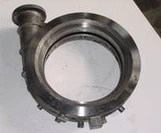
Investment casting, also known as lost - wax casting, has become a go - to method for producing high - quality Al Alloy Upper Casings. This process involves creating a wax pattern of the casing, coating it with a ceramic shell, melting out the wax, and then pouring molten aluminum alloy into the shell. The result is a casing with excellent surface finish and dimensional accuracy. It's especially useful for producing complex shapes that are hard to achieve with other methods. You can learn more about the application of these casting technologies in large - scale projects on the Large Al Alloy Casting page.
Die - casting, on the other hand, is great for high - volume production. In die - casting, molten aluminum alloy is injected into a steel die under high pressure. This allows for rapid production of casings with consistent quality. Modern die - casting machines are equipped with advanced control systems that can precisely regulate parameters like temperature, pressure, and injection speed, ensuring that each casing meets the strict quality standards.
2. Material Innovation
The materials used in Al Alloy Upper Casing production are also evolving. New aluminum alloys are being developed to enhance the performance of the casings. For example, some alloys now have improved strength - to - weight ratios, which is crucial in applications where weight reduction is a priority, like in the aerospace industry.
These new alloys are often formulated with specific additives to improve properties such as corrosion resistance, heat resistance, and mechanical strength. For instance, adding elements like magnesium and silicon can increase the strength of the alloy, while adding chromium can enhance its corrosion resistance. As a supplier, I'm always on the lookout for the latest alloy developments to offer my customers the best - performing Al Alloy Upper Casings. And if you're interested in the different types of aluminum alloy casings, you can check out the Al Alloy Upper Casing page.
3. Digital Manufacturing and Automation
Digital manufacturing and automation are revolutionizing the Al Alloy Upper Casing production process. Computer - aided design (CAD) and computer - aided manufacturing (CAM) technologies are now widely used. With CAD, engineers can design the casing in a virtual environment, making it easy to modify the design and optimize its performance. CAM then takes the CAD design and translates it into instructions for the manufacturing equipment, such as CNC machines.


Automation is also playing a huge role. Robots are being used for tasks like pouring molten metal, removing casings from the molds, and performing quality inspections. This not only increases the production efficiency but also reduces the risk of human error. For example, robotic arms can perform repetitive tasks with high precision, ensuring that each casing is produced to the same high standard. And the use of sensors and real - time monitoring systems allows for better control of the production process, enabling us to detect and correct any issues immediately.
4. Surface Treatment Technologies
Surface treatment is an important aspect of Al Alloy Upper Casing production. It not only enhances the appearance of the casing but also improves its performance and durability. There are several surface treatment technologies available today.
Anodizing is a popular surface treatment method. It creates a protective oxide layer on the surface of the aluminum alloy, which increases its corrosion resistance and wear resistance. The anodizing process can also be used to color the casing, giving it an aesthetically pleasing look. Another surface treatment technology is powder coating. Powder coating involves applying a dry powder to the surface of the casing and then curing it under heat. This creates a tough, durable finish that is resistant to chipping, scratching, and fading.
In the aerospace industry, where the casings are exposed to harsh environments, advanced surface treatment technologies are even more critical. For example, some surface treatments can provide protection against high - altitude radiation and extreme temperature changes. If you're curious about how these surface treatments are applied in real - world applications, you can take a look at the Airplane Door page, which showcases the importance of surface treatment in aerospace components.
5. Environmental Sustainability
In today's world, environmental sustainability is a key concern in every industry, and Al Alloy Upper Casing production is no exception. We're seeing a growing trend towards more sustainable manufacturing practices.
One aspect of this is the recycling of aluminum. Aluminum is a highly recyclable material, and recycling it requires significantly less energy compared to producing new aluminum from bauxite ore. As a supplier, I'm committed to using recycled aluminum in my production process wherever possible. This not only reduces the environmental impact but also helps to lower the cost of production.
Another sustainable practice is the reduction of waste in the manufacturing process. By optimizing the casting and machining processes, we can minimize the amount of scrap material generated. And the use of environmentally friendly surface treatment chemicals is also becoming more common, as these chemicals have less impact on the environment compared to traditional ones.
Conclusion
So, there you have it - the technological trends in Al Alloy Upper Casing production. From precision casting and material innovation to digital manufacturing, surface treatment, and environmental sustainability, the industry is constantly evolving. As a supplier, I'm always striving to stay at the forefront of these trends to offer my customers the best - quality Al Alloy Upper Casings.
If you're in the market for Al Alloy Upper Casings, whether it's for aerospace, automotive, or other applications, I'd love to have a chat with you. I can provide you with more information about our products, discuss your specific requirements, and offer you a competitive quote. So, don't hesitate to reach out for a procurement discussion. Let's work together to find the perfect Al Alloy Upper Casing solution for your needs.
References
- Smith, J. (2020). "Advances in Aluminum Alloy Casting Technologies". Journal of Manufacturing Science.
- Johnson, A. (2021). "Material Innovation in Aluminum Alloys for Aerospace Applications". Aerospace Engineering Review.
- Brown, C. (2022). "Digital Manufacturing in the Metal Casting Industry". Manufacturing Technology Magazine.