Hey there! I'm a supplier in the copper alloy casting business. Over the years, I've come to realize that quality inspectors play a super crucial role in our industry. So, I thought I'd share some insights on what skills quality inspectors need for copper alloy casting.
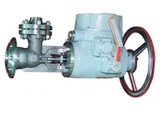
First off, let's talk about technical knowledge. Quality inspectors gotta have a solid understanding of copper alloy materials. They need to know the different types of copper alloys used in casting, like bronze and brass. Each alloy has its own unique properties, such as strength, corrosion resistance, and thermal conductivity. For example, bronze is often used for Cu Alloy Valve Body because of its good corrosion resistance and durability. Inspectors should be able to identify these alloys correctly and understand how their properties can affect the final casting.
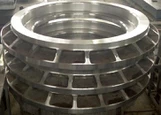
They also need to be familiar with the casting process itself. There are various casting methods for copper alloys, including sand casting, investment casting, and centrifugal casting. Take centrifugal casting, for instance. It's used to make products like Cu Alloy Sleeve by Centrifugal Casting. Inspectors need to know how this process works, what the potential defects are, and how to detect them. They should understand things like mold design, pouring temperature, and solidification time, as these factors can all impact the quality of the casting.
Another important skill is inspection techniques. Quality inspectors use a variety of tools and methods to check the quality of copper alloy castings. Visual inspection is the most basic one. They need to have sharp eyes to spot surface defects like cracks, porosity, and inclusions. But visual inspection alone isn't enough. They also need to be proficient in using non - destructive testing (NDT) methods. For example, ultrasonic testing can be used to detect internal defects in the casting. Inspectors should know how to operate the ultrasonic testing equipment, interpret the test results, and determine if the casting meets the quality standards.
X - ray inspection is another powerful NDT method. It can reveal hidden defects deep inside the casting. Inspectors need to be trained to set up the X - ray machine correctly, adjust the parameters according to the size and type of the casting, and analyze the X - ray images. They should be able to distinguish between normal structures and defects in the images.
In addition to NDT, dimensional inspection is also crucial. Copper alloy castings need to meet specific dimensional tolerances. Inspectors use tools like calipers, micrometers, and coordinate measuring machines (CMMs) to measure the dimensions of the castings. They need to know how to use these tools accurately and compare the measured values with the design specifications. If the dimensions are out of tolerance, they need to determine whether the casting can be reworked or if it should be rejected.
Problem - solving skills are a must for quality inspectors. When they find a defect in a copper alloy casting, they need to be able to figure out the root cause. It could be due to a problem in the raw materials, the casting process, or the mold. For example, if there are porosity defects in the casting, it could be because the molten metal was not degassed properly during the melting process, or the pouring system was not designed correctly. Inspectors need to analyze the situation, gather relevant data, and come up with solutions to prevent the defect from recurring.
Communication skills are also important. Quality inspectors need to communicate effectively with different teams in the company. They need to report their inspection results to the production team, so that the production process can be adjusted if necessary. They also need to communicate with the engineering team when there are issues related to the design or the casting process. Good communication can help ensure that everyone is on the same page and that quality problems are resolved quickly.
Documentation skills are often overlooked but are very important. Inspectors need to keep detailed records of their inspections. This includes information about the casting, such as the part number, the batch number, the inspection date, and the inspection results. They also need to document any defects they find, including the location, size, and type of the defect. These records are not only useful for quality control purposes but also for traceability. In case there are any quality issues in the future, the records can be used to track back and identify the source of the problem.
Quality inspectors also need to stay updated with the latest industry standards and regulations. The copper alloy casting industry is constantly evolving, and new standards are being developed all the time. They need to be aware of these changes and ensure that the castings they inspect meet the current standards. This may involve attending training courses, reading industry publications, and participating in professional organizations.
Now, let me tell you a bit about why these skills matter to us as a copper alloy casting supplier. High - quality castings are essential for our business. Our customers rely on us to provide them with products that meet their requirements. A quality inspector with the right skills can help us ensure that our castings are of the highest quality. This not only helps us maintain a good reputation in the market but also reduces the risk of product recalls and customer complaints.


If you're in the market for high - quality copper alloy castings, I encourage you to reach out to us. We have a team of experienced quality inspectors who are well - equipped with all the skills I've mentioned above. We're committed to providing you with the best products and services. Whether you need a Cu Alloy Valve Body or a Cu Alloy Sleeve by Centrifugal Casting, we've got you covered. Don't hesitate to contact us for a quote or to discuss your specific needs.
References:
- "Copper and Copper Alloys: Casting and Fabrication" - A technical guide on copper alloy casting processes and quality control.
- Industry standards publications from relevant organizations such as ASTM International for copper alloy casting requirements.