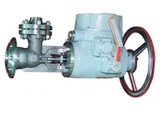
As a dedicated supplier of Ti Alloy Valves, I often encounter inquiries about the technical aspects of our products. One question that frequently comes up is: What is the friction coefficient of Ti Alloy Valve? In this blog, I'll delve into this topic, providing a comprehensive understanding of the friction coefficient of Ti alloy valves and its implications for various applications.


Understanding the Basics of Friction Coefficient
Before we discuss the friction coefficient of Ti alloy valves, let's first understand what the friction coefficient is. The friction coefficient, denoted as μ, is a dimensionless quantity that represents the ratio of the force of friction between two surfaces to the normal force pressing the two surfaces together. It quantifies the resistance to relative motion between two objects in contact. There are two main types of friction coefficients: static friction coefficient (μs), which applies when the two surfaces are at rest relative to each other, and kinetic friction coefficient (μk), which applies when the two surfaces are in motion relative to each other.
Factors Affecting the Friction Coefficient of Ti Alloy Valves
The friction coefficient of Ti alloy valves is influenced by several factors, including the surface finish, the presence of lubricants, the contact pressure, and the relative motion between the valve components.
- Surface Finish: The surface finish of the Ti alloy valve plays a crucial role in determining its friction coefficient. A smoother surface finish generally results in a lower friction coefficient, as there are fewer irregularities to impede the relative motion between the surfaces. For example, a valve with a polished surface will have a lower friction coefficient compared to a valve with a rough surface.
- Lubricants: The use of lubricants can significantly reduce the friction coefficient of Ti alloy valves. Lubricants form a thin film between the contacting surfaces, separating them and reducing the direct contact between the asperities. This reduces the frictional forces and wear between the valve components. Common lubricants used in Ti alloy valves include oils, greases, and solid lubricants such as graphite and molybdenum disulfide.
- Contact Pressure: The contact pressure between the valve components also affects the friction coefficient. As the contact pressure increases, the real area of contact between the surfaces increases, which can lead to an increase in the friction coefficient. However, at very high contact pressures, the surface asperities may deform plastically, which can reduce the friction coefficient.
- Relative Motion: The type of relative motion between the valve components, such as sliding or rolling, can also affect the friction coefficient. Sliding motion generally results in a higher friction coefficient compared to rolling motion, as there is more direct contact between the surfaces.
Measuring the Friction Coefficient of Ti Alloy Valves
Measuring the friction coefficient of Ti alloy valves can be challenging, as it requires specialized equipment and techniques. One common method for measuring the friction coefficient is the pin-on-disk test, where a pin made of the Ti alloy is pressed against a rotating disk under a known load. The frictional force between the pin and the disk is measured, and the friction coefficient is calculated as the ratio of the frictional force to the normal force.
Another method for measuring the friction coefficient is the reciprocating sliding test, where a flat specimen of the Ti alloy is slid back and forth against a stationary surface under a known load. The frictional force is measured during the sliding motion, and the friction coefficient is calculated in the same way as in the pin-on-disk test.
Typical Values of the Friction Coefficient of Ti Alloy Valves
The friction coefficient of Ti alloy valves can vary depending on the factors mentioned above. In general, the static friction coefficient of Ti alloy valves ranges from 0.1 to 0.3, while the kinetic friction coefficient ranges from 0.05 to 0.2. These values are relatively low compared to other materials, which makes Ti alloy valves suitable for applications where low friction and wear are required.
Implications of the Friction Coefficient for Ti Alloy Valve Applications
The friction coefficient of Ti alloy valves has several implications for their applications. A low friction coefficient can reduce the operating torque required to open and close the valve, which can improve the efficiency of the valve and reduce the energy consumption. It can also reduce the wear and tear on the valve components, which can extend the service life of the valve and reduce the maintenance costs.
On the other hand, a high friction coefficient can lead to increased operating torque, which can require more powerful actuators and increase the energy consumption. It can also cause excessive wear and tear on the valve components, which can lead to premature failure of the valve.
Related Products and Their Importance
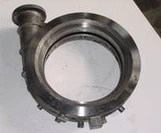
In addition to Ti alloy valves, we also offer other Ti alloy products such as Casting Of Titanium Alloys, Ti Alloy Pump Casing, and Ti Alloy Impeller. These products are also known for their excellent mechanical properties, corrosion resistance, and low friction coefficients, which make them suitable for a wide range of applications in the chemical, petrochemical, and aerospace industries.
- Casting Of Titanium Alloys: Titanium alloy casting is a process used to produce complex-shaped components with high precision and excellent mechanical properties. The casting process allows for the production of components with intricate geometries that are difficult to achieve using other manufacturing methods.
- Ti Alloy Pump Casing: Ti alloy pump casings are used in pumps to handle corrosive fluids and high-pressure applications. The low friction coefficient of Ti alloy pump casings reduces the energy consumption of the pump and improves its efficiency.
- Ti Alloy Impeller: Ti alloy impellers are used in pumps and turbines to convert the energy of a fluid into mechanical energy. The low friction coefficient of Ti alloy impellers reduces the wear and tear on the impeller blades and improves the performance of the pump or turbine.
Conclusion and Call to Action
In conclusion, the friction coefficient of Ti alloy valves is an important parameter that affects their performance and applications. A low friction coefficient can improve the efficiency, reduce the energy consumption, and extend the service life of the valve. As a leading supplier of Ti alloy valves and related products, we are committed to providing high-quality products that meet the needs of our customers. If you are interested in learning more about our Ti alloy valves or other products, or if you have any questions about the friction coefficient or other technical aspects of our products, please feel free to contact us for procurement and further discussions.
References
- Bowden, F. P., & Tabor, D. (1950). Friction and Lubrication of Solids. Oxford University Press.
- Czichos, H., Habig, K.-H., & Samoilovich, M. (2006). Tribology - Friction, Wear, Lubrication. Wiley-VCH.
- Zum Gahr, K. H. (1987). Microstructure and Wear of Materials. Cambridge University Press.