Hey there! As an Al Alloy Casting supplier, I often get asked about the coefficient of thermal expansion of common Al alloys for casting. It's a pretty important topic, especially for those who are in industries where temperature changes can have a big impact on the performance of aluminum alloy parts. So, let's dive right in and explore this together.
First off, what exactly is the coefficient of thermal expansion? Well, it's a measure of how much a material expands or contracts when its temperature changes. In simple terms, when you heat up a piece of aluminum alloy, it'll get a bit bigger, and when you cool it down, it'll shrink a little. The coefficient of thermal expansion tells us how much that size change is relative to the original size of the material.
Now, there are several common aluminum alloys used in casting, and each has its own unique coefficient of thermal expansion. Let's take a look at some of the most popular ones.
1. A356 Aluminum Alloy
A356 is one of the most widely used aluminum alloys for casting. It's known for its good mechanical properties, excellent castability, and corrosion resistance. The coefficient of thermal expansion of A356 aluminum alloy is approximately 22.5 x 10^-6 /°C (in the range of 20 - 100°C). This means that for every degree Celsius increase in temperature, a piece of A356 alloy will expand by about 22.5 millionths of its original length.
This alloy is often used in automotive parts such as engine blocks, cylinder heads, and wheels. The relatively stable coefficient of thermal expansion makes it suitable for these applications, as it can withstand the temperature variations that occur during normal engine operation without significant dimensional changes. If you're interested in A356 alloy castings, you might want to check out our Al Alloy Upper Casing, which is made from high - quality A356 alloy.
2. 319 Aluminum Alloy
319 aluminum alloy is another common choice for casting. It has good strength, ductility, and machinability. The coefficient of thermal expansion of 319 alloy is around 21.6 x 10^-6 /°C (20 - 100°C). It's often used in applications where high - temperature performance is required, such as in the aerospace and automotive industries. For example, it can be used to make components like intake manifolds and transmission cases.
The slightly lower coefficient of thermal expansion compared to A356 means that 319 alloy will expand less when heated, which can be an advantage in some high - precision applications. If you need 319 alloy castings, we offer a great selection of Al Alloy Ring products made from this alloy.

3. A380 Aluminum Alloy
A380 is a high - strength aluminum alloy with excellent castability and good corrosion resistance. Its coefficient of thermal expansion is about 22.7 x 10^-6 /°C (20 - 100°C). This alloy is commonly used in die - casting applications, such as making housings for electronic devices, automotive parts, and machinery components.
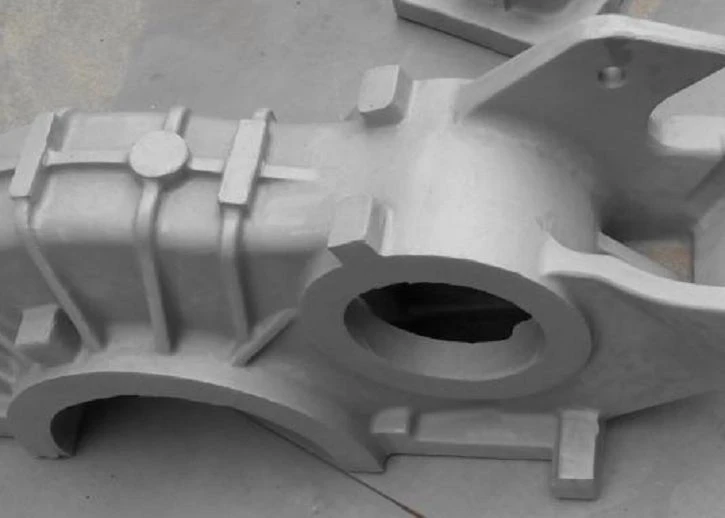
The relatively high coefficient of thermal expansion of A380 alloy means that it can expand more when heated. However, this can also be managed through proper design and manufacturing processes. We have a range of Large Al Alloy Casting products made from A380 alloy, which are suitable for various industrial applications.
Factors Affecting the Coefficient of Thermal Expansion
The coefficient of thermal expansion isn't a fixed value and can be affected by several factors. One of the main factors is the alloy composition. Different elements added to the aluminum base can change the crystal structure of the alloy, which in turn affects how it expands or contracts with temperature changes. For example, adding elements like silicon can reduce the coefficient of thermal expansion, as silicon has a relatively low expansion rate.
The heat treatment process also plays a role. Heat treatment can change the internal structure of the alloy, such as the distribution of phases and the size of grains. A well - controlled heat treatment can sometimes reduce the coefficient of thermal expansion or make it more uniform across the material.
The temperature range is another important factor. The coefficient of thermal expansion can vary depending on the temperature at which it's measured. In general, the coefficient of thermal expansion tends to increase with increasing temperature, but this relationship isn't always linear.
Why is the Coefficient of Thermal Expansion Important?
Understanding the coefficient of thermal expansion is crucial for several reasons. In engineering design, it helps in predicting how a component will behave under different temperature conditions. If the coefficient of thermal expansion isn't taken into account, a part might expand or contract too much, leading to dimensional inaccuracies, stress concentrations, and even failure.
For example, in a precision - engineered device, a small change in the size of a component due to temperature variations can affect its performance. In an engine, if the parts don't expand and contract in a coordinated way, it can lead to leaks, poor sealing, and reduced efficiency.
In the manufacturing process, knowledge of the coefficient of thermal expansion is also important for ensuring proper fit and assembly of parts. If two parts made from different alloys with different coefficients of thermal expansion are assembled together, they might experience differential expansion or contraction, which can cause problems over time.
Our Expertise as an Al Alloy Casting Supplier
As an Al Alloy Casting supplier, we have years of experience in dealing with different aluminum alloys and their properties. We use advanced manufacturing techniques and quality control measures to ensure that our castings have the desired coefficient of thermal expansion and other mechanical properties.
Our team of experts can help you select the right alloy for your specific application, taking into account factors such as the operating temperature range, required strength, and dimensional stability. We also offer customized casting solutions, so if you have a unique design or requirement, we can work with you to bring your ideas to life.
If you're in the market for high - quality aluminum alloy castings and want to learn more about the coefficient of thermal expansion or other properties of our products, don't hesitate to get in touch. We're always happy to have a chat and discuss how we can meet your needs. Whether you need a small batch of precision parts or large - scale production, we've got you covered.
References
- ASM Handbook, Volume 2: Properties and Selection: Nonferrous Alloys and Special - Purpose Materials
- Aluminum Association Technical Reports on Aluminum Alloys
- Research papers on the thermal properties of aluminum alloys from scientific journals.