Hey there! I'm a supplier of large Ti alloy casting, and I'm super excited to share with you the inspection methods for these awesome products. Titanium alloy castings are widely used in various industries, including aerospace, automotive, and marine, because of their high strength, low density, and excellent corrosion resistance. But to ensure the quality of these castings, proper inspection methods are crucial. So, let's dive in!
Visual Inspection
First up is visual inspection. This is the most basic and straightforward method. It's like giving your casting a good once - over with your own eyes. You look for obvious defects such as cracks, porosity, and surface roughness. Cracks can be a big problem as they can lead to structural failure over time. Porosity, which are small holes in the casting, can also weaken the material. And excessive surface roughness might not be suitable for applications where a smooth finish is required.
Visual inspection can be done with the naked eye, but sometimes, magnifying glasses or microscopes are used for a more detailed look. For large Ti alloy castings, we usually start by looking at the overall shape and size. We check if it matches the design specifications. Any visible signs of warping or distortion can be a red flag.
During visual inspection, I often think about how important it is to catch these surface - level issues early on. It saves a lot of time and money in the long run. After all, if we ship a defective casting, it could cause all sorts of problems for our customers.
Dye Penetrant Inspection
Next, we have dye penetrant inspection. This method is great for detecting surface - opening defects that might not be visible to the naked eye. Here's how it works: First, we apply a special dye to the surface of the casting. The dye seeps into any cracks or pores on the surface. After a certain amount of time, we wipe off the excess dye and apply a developer. The developer draws the dye out of the defects, making them clearly visible as bright - colored lines or spots.
Dye penetrant inspection is relatively simple and cost - effective. It can be used on a wide range of materials, including large Ti alloy castings. I've found that it's especially useful for detecting small cracks that could grow over time and cause serious problems. For more information on casting processes like this, you can check out Casting Of Titanium Alloys.
Magnetic Particle Inspection
Magnetic particle inspection is another important method, but it's mainly used for ferromagnetic materials. Titanium alloys are not ferromagnetic, so this method has limited application for our large Ti alloy castings. However, it's still worth mentioning for the sake of completeness.
In magnetic particle inspection, a magnetic field is applied to the casting. If there are any surface or near - surface defects, the magnetic field is disrupted, and magnetic particles will accumulate at the defect sites, making them visible. This method is very sensitive and can detect very small defects. But again, since titanium alloys don't respond well to magnetic fields, we don't rely on it for our products.
Ultrasonic Inspection
Ultrasonic inspection is a powerful non - destructive testing method for large Ti alloy castings. It uses high - frequency sound waves to detect internal defects. We send ultrasonic waves into the casting, and when these waves encounter a defect, such as a crack or a void, they are reflected back. By analyzing the reflected waves, we can determine the location, size, and shape of the defect.
One of the advantages of ultrasonic inspection is that it can detect internal defects that are not visible from the surface. This is crucial for ensuring the structural integrity of large Ti alloy castings. For example, in aerospace applications, where safety is of the utmost importance, ultrasonic inspection can help us make sure that our castings are free of hidden defects.
However, ultrasonic inspection requires skilled operators and specialized equipment. The results also need to be carefully interpreted. But it's definitely worth the effort, as it gives us a good idea of what's going on inside the casting.
Radiographic Inspection
Radiographic inspection, such as X - ray or gamma - ray inspection, is another way to detect internal defects in large Ti alloy castings. Similar to taking an X - ray of a human body, these methods use radiation to create an image of the internal structure of the casting.
X - ray inspection is commonly used for thinner castings, while gamma - ray inspection is more suitable for thicker ones. The radiation passes through the casting, and the intensity of the radiation that reaches the detector on the other side is affected by the internal structure. Defects like voids or inclusions show up as darker or lighter areas on the image.
Radiographic inspection provides a clear picture of the internal defects, but it has some drawbacks. It requires special safety precautions because of the radiation involved. Also, it can be time - consuming and expensive. But for critical applications, it's often necessary to use this method to ensure the quality of the casting.
Hardness Testing
Hardness testing is an important part of the inspection process for large Ti alloy castings. Hardness is a measure of a material's resistance to indentation or scratching. By testing the hardness of the casting, we can get an idea of its mechanical properties.
There are several methods of hardness testing, such as the Brinell, Rockwell, and Vickers methods. Each method has its own advantages and is suitable for different types of materials and applications. For large Ti alloy castings, we usually choose the method based on the size and shape of the casting, as well as the required accuracy.
If the hardness of the casting is not within the specified range, it could indicate problems with the heat treatment process or the material composition. This could affect the performance of the casting in its intended application.
Chemical Analysis
Chemical analysis is used to determine the composition of the large Ti alloy casting. The chemical composition of the alloy has a significant impact on its properties, such as strength, corrosion resistance, and heat resistance.
We use various techniques for chemical analysis, such as spectroscopy. Spectroscopy can identify the elements present in the casting and measure their concentrations. By comparing the results with the design specifications, we can ensure that the casting has the right chemical composition.
For example, if the amount of a certain alloying element is too high or too low, it could affect the performance of the casting. Chemical analysis helps us catch these issues early and make any necessary adjustments.
Final Thoughts
In conclusion, inspecting large Ti alloy castings is a multi - step process that involves a variety of methods. Each method has its own strengths and limitations, and we often use a combination of them to ensure the highest quality of our products.


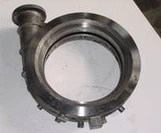
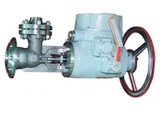
At our company, we take quality very seriously. We know that our customers rely on us to provide them with high - quality large Ti alloy castings for their applications. Whether it's a Ti Alloy Pump Casing or a Ti Alloy Valve, we make sure that every casting meets the strictest standards.
If you're in the market for large Ti alloy castings, I encourage you to reach out to us. We'd be more than happy to discuss your requirements and provide you with high - quality products. Our experienced team is always ready to help you find the best solution for your needs.
References
- ASM Handbook Volume 17: Nondestructive Evaluation and Quality Control
- ASTM Standards for Titanium and Titanium Alloys
- Textbooks on Materials Science and Engineering