As a supplier of Al Alloy Casting, I've been in the industry for quite some time, and I've seen firsthand how crucial it is to improve the strength of these castings. In this blog, I'll share some practical tips and insights on how to achieve that.
Understanding the Basics of Al Alloy Casting
Before we dive into the ways to improve strength, let's quickly go over what Al Alloy Casting is. Aluminum alloy casting is a process where molten aluminum alloy is poured into a mold to create various shapes and components. These castings are used in a wide range of industries, from automotive to aerospace, because of their lightweight and corrosion-resistant properties.
But the strength of these castings can vary significantly depending on several factors, including the alloy composition, casting process, and post-casting treatments.


Alloy Composition
The first step in improving the strength of Al Alloy Casting is to choose the right alloy composition. Different alloys have different properties, and some are better suited for high-strength applications than others.
For example, alloys with high copper content, like the 200 series, tend to have higher strength but lower corrosion resistance. On the other hand, alloys with high silicon content, like the 300 series, are more fluid and have better casting properties, but they may not be as strong.
As a supplier, we work closely with our customers to understand their specific requirements and recommend the most suitable alloy composition. Sometimes, we even develop custom alloys to meet their unique needs.
Casting Process
The casting process also plays a significant role in the strength of Al Alloy Casting. There are several casting methods, including sand casting, die casting, and investment casting, each with its own advantages and disadvantages.
- Sand Casting: This is one of the oldest and most common casting methods. It's relatively inexpensive and can be used to produce large and complex parts. However, the surface finish and dimensional accuracy may not be as good as other methods, and the strength of the casting may be affected by the presence of porosity.
- Die Casting: Die casting is a high-pressure casting method that produces parts with high dimensional accuracy and excellent surface finish. It's suitable for mass production and can produce parts with thin walls. However, the initial tooling cost is high, and the casting may be prone to hot cracking.
- Investment Casting: Investment casting, also known as lost-wax casting, is a precision casting method that can produce parts with very complex shapes and high dimensional accuracy. It's often used for high-value and high-performance applications. However, the process is more expensive and time-consuming than other methods.
To improve the strength of the casting, we carefully select the casting method based on the part design, quantity, and quality requirements. We also optimize the casting parameters, such as the pouring temperature, pressure, and cooling rate, to ensure a dense and defect-free microstructure.
Heat Treatment
Heat treatment is another important step in improving the strength of Al Alloy Casting. By subjecting the casting to specific heating and cooling cycles, we can change its microstructure and improve its mechanical properties.
There are several types of heat treatment processes, including solution heat treatment, precipitation hardening, and annealing.
- Solution Heat Treatment: This process involves heating the casting to a high temperature and holding it there for a certain period of time to dissolve the alloying elements in the aluminum matrix. After that, the casting is rapidly cooled to room temperature to form a supersaturated solid solution.
- Precipitation Hardening: Also known as age hardening, this process involves heating the solution-treated casting to a lower temperature and holding it there for a longer period of time. During this time, the alloying elements precipitate out of the solid solution and form fine particles, which strengthen the casting.
- Annealing: Annealing is a process of heating the casting to a high temperature and then slowly cooling it to relieve internal stresses and improve its ductility.
We use heat treatment to optimize the strength, hardness, and ductility of the casting according to the customer's requirements. It's a critical step in ensuring the quality and performance of the final product.
Quality Control
Quality control is essential in every step of the Al Alloy Casting process to ensure the strength and reliability of the casting. We have a comprehensive quality control system in place, which includes incoming material inspection, in-process inspection, and final product inspection.
We use advanced testing equipment, such as X-ray machines, ultrasonic flaw detectors, and hardness testers, to detect any defects or inconsistencies in the casting. If any issues are found, we take immediate corrective actions to ensure that the casting meets the required specifications.
Real-World Applications
Improving the strength of Al Alloy Casting has many real-world applications. For example, in the automotive industry, high-strength aluminum alloy castings are used in engine blocks, transmission cases, and suspension components to reduce weight and improve fuel efficiency.
In the aerospace industry, these castings are used in aircraft structures, such as wings and fuselages, to provide high strength and stiffness while maintaining a low weight.
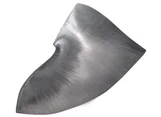
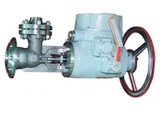
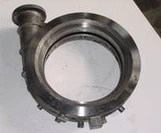
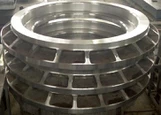
If you're interested in learning more about our Upper Casing Aluminum Alloy Casting, Alluminum Alloy Casting, or High Strength Al Alloy Casting, feel free to contact us. We're always happy to discuss your specific needs and provide customized solutions.
Conclusion
Improving the strength of Al Alloy Casting is a complex process that requires a combination of the right alloy composition, casting process, heat treatment, and quality control. As a supplier, we have the expertise and experience to help our customers achieve their goals.
If you're in the market for high-quality Al Alloy Casting, we'd love to hear from you. Whether you need a small batch of custom parts or a large-scale production run, we can provide you with the best solutions at competitive prices. Contact us today to start a conversation about your next project.
References
- "Aluminum Alloys: Structure and Properties" by David S. Wilkinson
- "Casting, Forming and Welding" by P. N. Rao
- "Heat Treatment of Aluminum Alloys" by John H. Westbrook