

Casting is a manufacturing process in which a liquid material is usually poured into a mold, which contains a hollow cavity of the desired shape, and then allowed to solidify. The solidified part is also known as a casting, which is ejected or broken out of the mold to complete the process. As a professional casting equipment supplier, understanding the technical parameters of casting equipment is crucial for both us and our customers. These parameters not only determine the performance and quality of the equipment but also influence the final casting products.
1. Melting Equipment
1.1 Industrial Furnaces For Cast Iron
Industrial furnaces are the heart of the casting process, especially for cast iron. They are designed to heat and melt the metal to the required temperature. One of the most important technical parameters of industrial furnaces is the melting capacity, which is usually measured in tons per hour or kilograms per batch. For example, a small - scale industrial furnace may have a melting capacity of 0.5 tons per hour, while large - scale ones can reach up to 10 tons per hour or more.
The temperature control accuracy is another critical parameter. Precise temperature control is essential to ensure the quality of the molten metal. Most modern industrial furnaces can achieve a temperature control accuracy of ±5°C to ±10°C. This accuracy helps to prevent over - heating or under - heating of the metal, which can lead to defects in the final casting.
The energy efficiency of the furnace is also a key consideration. High - energy - efficient furnaces can significantly reduce operating costs. The energy consumption of industrial furnaces is usually measured in kilowatt - hours per ton of melted metal. A well - designed furnace can consume as little as 400 - 500 kWh per ton of cast iron. You can find more information about Industrial Furnaces For Cast Iron.
1.2 Electro - slag Remelting Casting (ESRC)
ESRC is a specialized melting and refining process. The power input of an ESRC unit is a major technical parameter. It determines the melting rate and the quality of the remelted ingot. Power inputs can range from a few hundred kilowatts for small - scale ESRC units to several megawatts for large - scale industrial applications.
The electrode consumption rate is also important. In ESRC, the electrode is gradually consumed during the remelting process. A lower electrode consumption rate means less waste and lower operating costs. Generally, the electrode consumption rate in a well - optimized ESRC process is around 1 - 2% of the weight of the remelted ingot.
The slag composition and its properties play a vital role in ESRC. The slag acts as a refining agent and a heat - transfer medium. The melting point, viscosity, and electrical conductivity of the slag need to be carefully controlled. For example, the melting point of the slag is usually in the range of 1300 - 1500°C. More details about Electro - slag Remelting Casting (ESRC) can be found on our website.
2. Refining Equipment
2.1 AOD (Argon Oxygen Decarburization) Refining Furnace
The AOD refining furnace is widely used in the steel and alloy casting industry for decarburization and refining. The gas flow rate is a key technical parameter. The flow rates of argon and oxygen need to be precisely controlled to achieve the desired decarburization rate and alloy composition. The oxygen flow rate can range from a few cubic meters per hour to tens of cubic meters per hour, depending on the size of the furnace and the amount of metal being refined.
The pressure inside the AOD furnace is also critical. Maintaining the correct pressure is necessary for the proper reaction between the gas and the molten metal. The pressure in an AOD furnace is usually maintained at around 0.5 - 1.5 MPa.
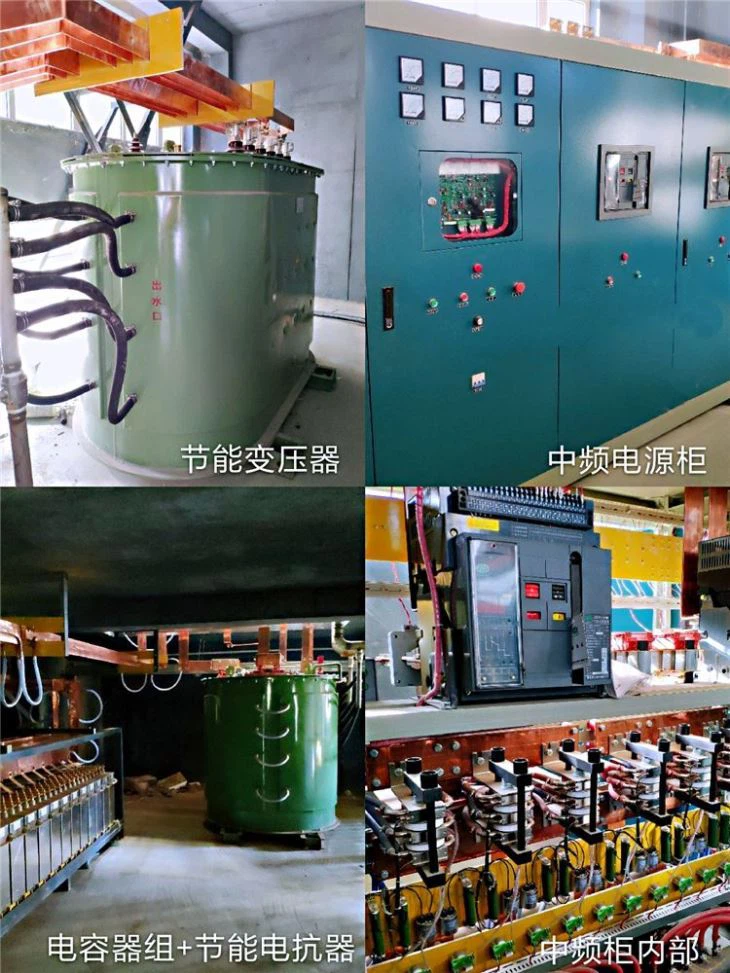

The lining life of the AOD furnace is an important economic parameter. The lining material is exposed to high - temperature molten metal and corrosive gases. A longer lining life means less frequent maintenance and lower operating costs. A well - designed AOD furnace lining can last for several hundred heats. You can get more insights into AOD (Argon Oxygen Decarburization) Refining Furnace on our website.
3. Molding and Core - Making Equipment
3.1 Molding Machines
For molding machines, the molding force is a fundamental parameter. It determines the ability of the machine to compact the molding sand around the pattern. The molding force can range from a few tons for small - scale manual molding machines to several hundred tons for large - scale automatic molding lines.
The sand - filling density is another important factor. A uniform and high sand - filling density ensures the dimensional accuracy and surface quality of the mold. Modern molding machines can achieve a sand - filling density of 1.6 - 1.8 g/cm³.
The cycle time of the molding machine is also crucial for production efficiency. A shorter cycle time means higher production output. High - speed molding machines can complete a molding cycle in as little as 10 - 20 seconds.
3.2 Core - Making Machines
Core - making machines are used to produce cores, which are used to create internal cavities in castings. The core - shooting pressure is a key parameter. It affects the shape and density of the core. Core - shooting pressures can range from 0.2 - 0.8 MPa.
The curing time of the core is also important. Different core - making materials have different curing times. For example, phenolic resin - bonded cores may require a curing time of 1 - 5 minutes at a certain temperature.
The dimensional accuracy of the core - making machine is essential to ensure the accuracy of the internal cavities in the castings. Most modern core - making machines can achieve a dimensional accuracy of ±0.1 - ±0.3 mm.
4. Pouring Equipment
4.1 Automatic Pouring Machines
The pouring rate is a critical parameter for automatic pouring machines. It needs to be adjusted according to the size and shape of the casting. The pouring rate can range from a few kilograms per second for small castings to tens of kilograms per second for large castings.
The pouring accuracy is also important. Precise pouring helps to prevent over - pouring or under - pouring, which can lead to casting defects. Automatic pouring machines can achieve a pouring accuracy of ±1 - ±3% of the total weight of the poured metal.
The ladle capacity is another consideration. The ladle should be able to hold enough molten metal for the casting process. Ladle capacities can range from a few kilograms for small - scale pouring machines to several tons for large - scale industrial applications.
5. Cooling and Heat - Treatment Equipment
5.1 Cooling Beds
The cooling rate is the main parameter for cooling beds. A proper cooling rate is necessary to prevent thermal stress and cracking in the castings. The cooling rate can be controlled by adjusting the air flow or the water spray on the cooling bed. Cooling rates can range from a few degrees Celsius per minute to tens of degrees Celsius per minute, depending on the type of casting material.
5.2 Heat - Treatment Furnaces
For heat - treatment furnaces, the heating rate, holding time, and cooling rate are the key parameters. The heating rate determines how quickly the casting is heated to the desired temperature. It is usually in the range of 5 - 20°C per minute.
The holding time is the time during which the casting is kept at the desired temperature for a specific heat - treatment process, such as annealing or quenching. Holding times can range from a few minutes to several hours.
The cooling rate after heat - treatment is also crucial. Different cooling rates can result in different microstructures and mechanical properties of the castings.
In conclusion, understanding the technical parameters of casting equipment is essential for producing high - quality castings efficiently. As a casting equipment supplier, we are committed to providing our customers with equipment that meets the highest standards in terms of these technical parameters. If you are interested in our casting equipment or have any questions about the technical parameters, please feel free to contact us for a detailed discussion and potential procurement negotiation.
References
- "Casting Handbook: Metal Casting Processes, Materials, and Technologies"
- "Industrial Furnace Technology"
- "Foundry Technology and Management"


