

In the manufacturing industry, large Al alloy casting plays a crucial role in various sectors such as aerospace, automotive, and marine. As a leading supplier of Large Al Alloy Casting, I have witnessed firsthand the dynamic changes and emerging research trends in this field. This blog aims to explore the current research trends in large Al alloy casting, which not only reflect the industry's technological progress but also provide valuable insights for manufacturers and researchers alike.
1. High - Performance Alloy Development
One of the primary research trends in large Al alloy casting is the development of high - performance alloys. Traditional aluminum alloys may not always meet the stringent requirements of modern applications, such as high strength - to - weight ratio, excellent corrosion resistance, and good thermal stability.
Researchers are focusing on alloying elements to enhance the mechanical properties of aluminum alloys. For example, the addition of elements like copper, magnesium, and zinc can significantly improve the strength of the alloy. Copper can form precipitation - strengthening phases, which contribute to the overall strength of the casting. Magnesium, on the other hand, can enhance the alloy's corrosion resistance and also play a role in precipitation hardening. Zinc can increase the strength and hardness of the alloy, especially when combined with other elements.
Moreover, the development of new alloy systems is also an area of active research. For instance, some researchers are exploring the use of rare - earth elements in aluminum alloys. Rare - earth elements can refine the grain structure of the alloy, improve its high - temperature performance, and enhance its mechanical properties. These new alloy systems have the potential to open up new applications for large Al alloy castings, such as in high - temperature environments in aerospace engines or in components that require excellent wear resistance in the automotive industry.
2. Precision Casting Technology
Precision casting technology is another important research trend in large Al alloy casting. In many applications, especially in the aerospace and automotive industries, high dimensional accuracy and surface quality are essential.
Investment casting is one of the key precision casting methods being further developed. This process involves creating a wax pattern of the desired part, coating it with a ceramic shell, melting out the wax, and then pouring the molten aluminum alloy into the shell. The advantage of investment casting is its ability to produce complex - shaped parts with high precision. Researchers are working on improving the accuracy of the wax pattern production, optimizing the ceramic shell formulation, and reducing the defects in the casting process.
Another precision casting technology is the low - pressure casting method. In low - pressure casting, the molten aluminum alloy is forced into the mold cavity under low pressure. This method can ensure better filling of the mold, reduce the formation of porosity, and improve the mechanical properties of the casting. Researchers are exploring ways to optimize the pressure control system, improve the mold design, and enhance the overall efficiency of the low - pressure casting process for large Al alloy castings.
3. Defect Control and Quality Assurance
Defect control and quality assurance are of utmost importance in large Al alloy casting. Defects such as porosity, shrinkage, and cracks can significantly affect the mechanical properties and performance of the castings.
Porosity is a common defect in aluminum alloy castings. It can be caused by gas entrapment during the melting and pouring process, or by shrinkage during solidification. Researchers are developing methods to reduce porosity, such as vacuum degassing during the melting process, optimizing the gating system to ensure smooth filling of the mold, and using proper casting parameters to minimize gas formation.
Shrinkage is another defect that needs to be controlled. During the solidification of the molten aluminum alloy, it will shrink in volume. If the shrinkage is not properly compensated, it can lead to shrinkage cavities in the casting. Researchers are working on developing mathematical models to predict shrinkage behavior and designing appropriate gating and riser systems to feed the shrinkage during solidification.
Crack formation is also a major concern. Cracks can occur due to thermal stress during solidification, improper alloy composition, or mechanical stress during the casting process. To prevent crack formation, researchers are studying the thermal behavior of the casting, optimizing the alloy composition to reduce thermal stress, and improving the mold design to minimize mechanical stress on the casting.
In addition to defect control, quality assurance is also an important aspect. Non - destructive testing methods, such as ultrasonic testing, X - ray testing, and magnetic particle testing, are being widely used to detect internal and surface defects in large Al alloy castings. Researchers are working on improving the sensitivity and accuracy of these testing methods, as well as developing new testing techniques to ensure the quality of the castings.
4. Simulation and Modeling
Simulation and modeling are becoming increasingly important in large Al alloy casting research. By using computer - based simulation software, researchers can predict the behavior of the molten aluminum alloy during the casting process, such as its flow pattern, solidification process, and the formation of defects.
Flow simulation can help optimize the gating system design. By simulating the flow of the molten aluminum alloy in the mold cavity, researchers can determine the best gating location, size, and shape to ensure uniform filling of the mold and reduce the formation of turbulence, which can lead to gas entrapment and other defects.
Solidification simulation can predict the shrinkage behavior and the formation of microstructures during the solidification process. This information can be used to design appropriate gating and riser systems to compensate for shrinkage and to control the microstructure of the casting, which in turn affects its mechanical properties.
Moreover, stress simulation can be used to predict the thermal and mechanical stress distribution in the casting during the solidification and cooling process. This can help identify potential areas of crack formation and allow for the optimization of the casting process and mold design to reduce stress.
5. Environmental Sustainability
In recent years, environmental sustainability has become a significant research trend in large Al alloy casting. The aluminum alloy casting process consumes a large amount of energy, and it also generates waste materials.
To reduce energy consumption, researchers are exploring new melting and casting technologies. For example, using more efficient melting furnaces that can reduce the energy required to melt the aluminum alloy. Some new melting technologies can also reduce the oxidation of the aluminum alloy during melting, which can improve the quality of the molten metal and reduce the amount of scrap generated.
In terms of waste management, recycling of aluminum alloy scrap is an important area of research. Recycling aluminum alloy scrap can not only reduce the consumption of primary aluminum resources but also save energy. Researchers are developing more efficient recycling processes that can separate different alloying elements in the scrap and produce high - quality recycled aluminum alloys.
6. Application - Specific Research
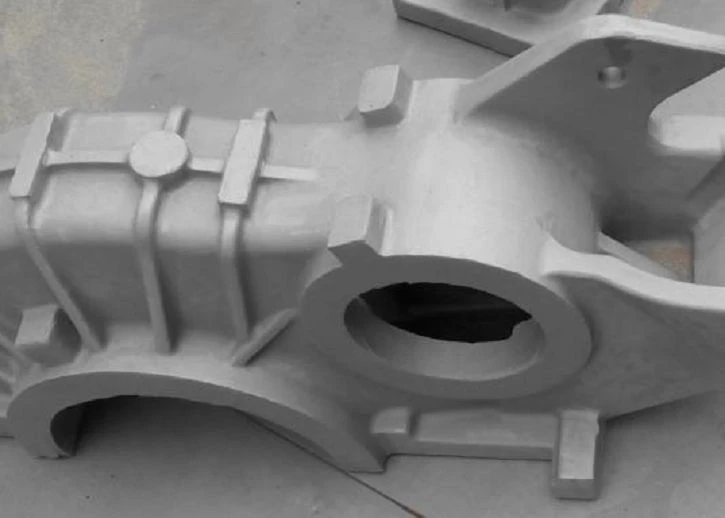
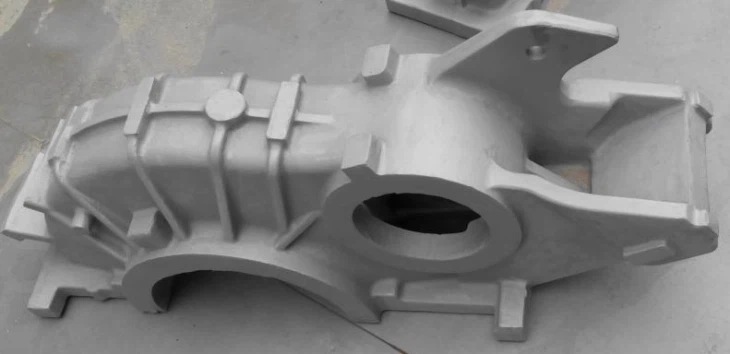
Different applications of large Al alloy castings require specific research and development efforts. For example, in the aerospace industry, the Al Alloy Upper Casing or Upper Casing Aluminum Alloy Casting needs to meet strict requirements in terms of weight reduction, high - temperature performance, and fatigue resistance.
In the automotive industry, large Al alloy castings are often used in engine blocks, transmission cases, and suspension components. For these applications, research is focused on improving the mechanical properties of the castings while reducing their weight to improve fuel efficiency. Additionally, the castings need to have good vibration - damping properties to ensure a smooth and quiet ride.
In the marine industry, large Al alloy castings are used in components such as propellers, ship hulls, and marine engine parts. These castings need to have excellent corrosion resistance in salt - water environments, as well as high strength and toughness to withstand the harsh marine conditions.
Conclusion
The research trends in large Al alloy casting are diverse and dynamic, covering aspects such as high - performance alloy development, precision casting technology, defect control, simulation and modeling, environmental sustainability, and application - specific research. As a supplier of large Al alloy castings, we are committed to keeping up with these research trends and applying the latest technologies and knowledge to our production process.
If you are interested in our large Al alloy casting products or have specific requirements for your projects, we welcome you to contact us for procurement and negotiation. We are confident that our high - quality products and professional services can meet your needs.
References
- Smith, J. (2020). Advances in Aluminum Alloy Casting Technology. Journal of Materials Science and Engineering, 35(2), 123 - 135.
- Johnson, A. (2021). Research on Defect Control in Large Aluminum Alloy Castings. International Journal of Casting Technology, 20(3), 201 - 212.
- Brown, C. (2022). High - Performance Aluminum Alloys for Precision Casting. Materials Science Forum, 789, 45 - 56.


