

Hey there! As a supplier of large Al alloy castings, I've seen firsthand how mold temperature can have a huge impact on the final product. In this blog, I'm gonna break down the effects of mold temperature on large Al alloy castings, and why it's so important to get it right.
1. Microstructure Formation
First off, let's talk about how mold temperature affects the microstructure of large Al alloy castings. When we pour molten aluminum alloy into the mold, the cooling rate is determined by the mold temperature. A lower mold temperature means a faster cooling rate, and this can lead to a finer grain structure in the casting.
A finer grain structure is generally a good thing. It can improve the mechanical properties of the casting, like its strength and hardness. For example, in High Strength Al Alloy Casting, a fine grain structure is often desired to achieve the high - strength requirements.
On the other hand, a higher mold temperature results in a slower cooling rate. This can lead to a coarser grain structure. Coarse grains might reduce the mechanical properties of the casting. But in some cases, a slower cooling rate can also help to reduce internal stresses in the casting, which is beneficial for preventing cracking.
2. Porosity and Shrinkage
Porosity and shrinkage are common defects in large Al alloy castings, and mold temperature plays a big role in them. When the mold temperature is too low, the molten aluminum alloy solidifies quickly. This rapid solidification can trap gas bubbles inside the casting, leading to porosity. Porosity can weaken the casting and make it more prone to failure under stress.
If the mold temperature is too high, the casting may experience excessive shrinkage. As the alloy cools and solidifies, it contracts. When the cooling is too slow due to high mold temperature, the shrinkage can be uneven, causing shrinkage cavities in the casting. These cavities can also reduce the integrity of the casting.
For instance, in Alluminum Alloy Casting, controlling the mold temperature is crucial to minimize porosity and shrinkage. By finding the right balance, we can produce high - quality castings with fewer defects.
3. Surface Finish
The surface finish of a large Al alloy casting is also affected by the mold temperature. A lower mold temperature can cause the molten alloy to solidify rapidly near the mold surface. This can result in a rough surface finish, as the alloy doesn't have enough time to flow smoothly and fill all the details of the mold cavity.
A higher mold temperature allows the molten alloy to flow more easily and fill the mold cavity completely. This usually leads to a smoother surface finish. In Upper Casing Aluminum Alloy Casting, a good surface finish is often required for aesthetic and functional reasons, such as for parts that need to fit precisely with other components.
4. Residual Stress
Residual stress is another important factor influenced by mold temperature. When the casting cools unevenly, residual stresses are generated. A large difference in mold temperature across the casting can cause significant residual stresses.
If the mold temperature is too low in some areas and too high in others, the parts of the casting that cool faster will contract more quickly than the slower - cooling parts. This differential contraction creates internal stresses. These residual stresses can cause the casting to warp or crack over time, even after it has been machined and put into service.
By carefully controlling the mold temperature, we can minimize the temperature gradients within the casting and reduce the generation of residual stresses. This helps to ensure the long - term stability and performance of the large Al alloy casting.
5. Production Efficiency
Mold temperature also has an impact on production efficiency. A lower mold temperature means a faster solidification time. This can potentially increase the production rate, as we can remove the casting from the mold sooner and start the next casting cycle. However, as we've seen, a very low mold temperature can lead to quality issues.
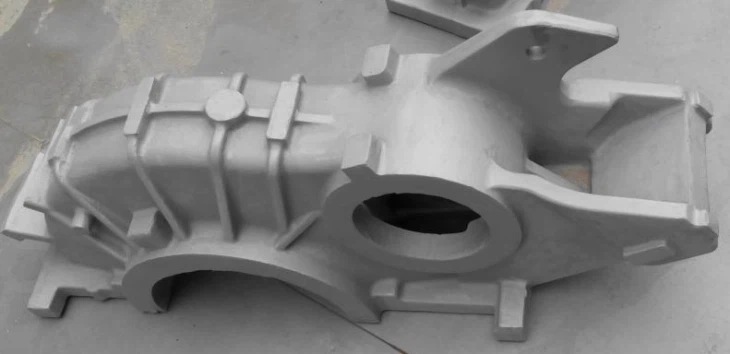

A higher mold temperature, on the other hand, requires more time for the casting to solidify. This can slow down the production process. But if we can find the optimal mold temperature that balances quality and production speed, we can improve overall production efficiency.
Finding the Optimal Mold Temperature
So, how do we find the optimal mold temperature for large Al alloy castings? Well, it depends on several factors, such as the specific alloy composition, the size and shape of the casting, and the desired properties of the final product.
We usually conduct a series of tests and simulations. By using computer - aided engineering (CAE) software, we can simulate the casting process under different mold temperatures and predict the resulting microstructure, porosity, and other properties. This helps us to narrow down the range of suitable mold temperatures.
We also rely on our experience and knowledge. Over the years, we've worked on many different types of large Al alloy castings, and we've learned a lot about how different mold temperatures affect the final product. By combining simulation results with practical experience, we can determine the best mold temperature for each specific casting project.
Conclusion
In conclusion, mold temperature has a profound effect on large Al alloy castings. It influences the microstructure, porosity, surface finish, residual stress, and production efficiency of the casting. As a supplier of large Al alloy castings, we understand the importance of controlling the mold temperature to produce high - quality products.
If you're in the market for Alluminum Alloy Casting, High Strength Al Alloy Casting, or Upper Casing Aluminum Alloy Casting, we're here to help. We have the expertise and technology to ensure that your castings are made with the optimal mold temperature, meeting your specific requirements. Don't hesitate to contact us for a quote or to discuss your project in more detail.
References
- Campbell, J. (2003). Castings. Butterworth - Heinemann.
- Flemings, M. C. (1974). Solidification Processing. McGraw - Hill.


