Hey there! I'm a supplier of Large Al Alloy Casting, and I've been in this industry for quite a while. Today, I wanna chat about how alloy composition affects large Al alloy castings.


Let's start with the basics. Aluminum alloys are super popular for casting because they're lightweight, have good corrosion resistance, and can be made into all sorts of shapes. But the composition of these alloys can really change the game when it comes to the final properties of the castings.
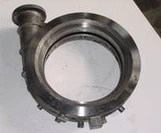
One of the key elements in aluminum alloys is silicon. Silicon is added to improve the fluidity of the molten alloy during casting. When you're making large castings, good fluidity is crucial. It allows the alloy to fill every nook and cranny of the mold, reducing the chances of defects like porosity. For example, in High Strength Al Alloy Casting, a proper amount of silicon can ensure that the casting has a uniform structure, which in turn enhances its mechanical properties.
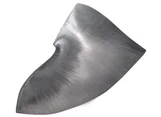
Magnesium is another important element. It can increase the strength and hardness of the aluminum alloy. In large castings, especially those that need to withstand high stress, magnesium plays a vital role. However, too much magnesium can make the alloy more prone to cracking during solidification. So, finding the right balance is essential. For instance, in Airplane Door castings, where high strength and reliability are required, the magnesium content needs to be carefully controlled.
Copper is often added to aluminum alloys to improve their strength and heat resistance. In large castings that are used in high - temperature environments, copper can help maintain the integrity of the casting. But copper can also reduce the corrosion resistance of the alloy. So, depending on the application of the large Al alloy casting, the copper content needs to be adjusted accordingly.
Zinc is also a common addition. It can increase the strength and hardness of the alloy, similar to magnesium. But like other elements, an excessive amount of zinc can lead to problems. It can cause the alloy to be more brittle, which is a big no - no for large castings that need to be tough and durable.
Now, let's talk about the impact of alloy composition on the casting process itself. Different alloy compositions have different melting points and solidification characteristics. For example, an alloy with a high silicon content may have a lower melting point, which means it requires less energy to melt. This can be a cost - saving factor in large - scale production. On the other hand, an alloy with a complex composition may have a more complicated solidification process, which requires more precise control of the cooling rate.
The heat treatment of large Al alloy castings is also affected by the alloy composition. Heat treatment is used to improve the mechanical properties of the castings, such as strength, hardness, and ductility. But different alloy compositions respond differently to heat treatment. For example, an alloy with a high magnesium content may require a different heat treatment process compared to an alloy with a high silicon content.
In terms of the final application of large Al alloy castings, the alloy composition can determine whether the casting is suitable for a particular use. For example, if you're making a Large Al Alloy Casting for a structural component in an aircraft, you need an alloy with high strength, good fatigue resistance, and excellent corrosion resistance. The right alloy composition will ensure that the casting meets these requirements.
Another aspect is the surface finish of the castings. Some alloy compositions can result in a smoother surface finish, which is important for applications where aesthetics or low friction are required. For example, in some automotive parts, a smooth surface finish can reduce drag and improve fuel efficiency.
When it comes to quality control, understanding the effect of alloy composition is crucial. By carefully analyzing the alloy composition, we can predict the properties of the castings and take appropriate measures to ensure their quality. For example, if we know that a certain alloy composition is more likely to produce porosity, we can adjust the casting process to minimize this defect.
In conclusion, the alloy composition has a profound impact on large Al alloy castings. It affects the casting process, the mechanical properties, the heat treatment response, the surface finish, and the final application of the castings. As a supplier of large Al alloy castings, I always pay close attention to the alloy composition to ensure that I can provide high - quality products to my customers.
If you're in the market for large Al alloy castings, whether it's for Airplane Door, High Strength Al Alloy Casting, or Large Al Alloy Casting, I'd be more than happy to have a chat with you about your specific needs. Let's work together to find the perfect alloy composition for your project.
References:
- "Aluminum Alloys: Structure and Properties" by John E. Hatch
- "Casting Processes and Quality Control for Aluminum Alloys" by Peter D. Lee