As a supplier of Super Alloy Casting, I've witnessed firsthand the challenges that come with maintaining the integrity of these high - performance materials, especially when it comes to oxidation resistance. Super alloy castings are widely used in demanding applications such as aerospace, power generation, and automotive industries, where they are often exposed to high temperatures and oxidizing environments. Improving the oxidation resistance of super alloy castings is not only crucial for their longevity but also for the overall performance and safety of the end - use products. In this blog, I'll share some effective strategies based on my experience in the industry.
Understanding the Oxidation Mechanism of Super Alloy Castings
Before delving into the methods of improving oxidation resistance, it's essential to understand how oxidation occurs in super alloy castings. Oxidation is a chemical reaction between the metal in the alloy and oxygen in the environment. At high temperatures, oxygen molecules can penetrate the surface of the super alloy, reacting with the metal elements to form metal oxides. These oxides can either form a protective layer that slows down further oxidation or spall off, exposing fresh metal to the oxidizing environment and accelerating the oxidation process.


The composition of the super alloy plays a significant role in its oxidation behavior. Elements such as chromium (Cr), aluminum (Al), and silicon (Si) are known to form stable oxide layers that can protect the underlying metal. For example, chromium forms a thin, dense chromium oxide (Cr₂O₃) layer on the surface of the alloy, which acts as a barrier against oxygen diffusion. Aluminum can form aluminum oxide (Al₂O₃), which is even more stable and protective at high temperatures.
Alloy Composition Optimization
One of the most fundamental ways to improve the oxidation resistance of super alloy castings is through alloy composition optimization. By carefully selecting and adjusting the alloying elements, we can enhance the formation of protective oxide layers.
- Increasing Chromium Content: Chromium is a key element in many super alloys due to its ability to form a protective Cr₂O₃ layer. Increasing the chromium content within a reasonable range can significantly improve the oxidation resistance. However, too much chromium can lead to the formation of brittle intermetallic phases, which can reduce the mechanical properties of the alloy. Therefore, a balance must be struck between oxidation resistance and mechanical performance.
- Adding Aluminum and Yttrium: Aluminum can form a highly protective Al₂O₃ layer, especially at very high temperatures. Yttrium is often added in small amounts as a reactive element. It can improve the adhesion of the oxide layer to the underlying metal, preventing spalling. The combination of aluminum and yttrium can enhance the long - term oxidation resistance of super alloy castings.
Surface Treatment Techniques
Surface treatment is another effective approach to improving the oxidation resistance of super alloy castings.
- Coating Application: Applying a protective coating on the surface of the super alloy casting can provide an additional barrier against oxidation. There are several types of coatings available, such as aluminide coatings, MCrAlY coatings (where M can be nickel, cobalt, or iron), and ceramic coatings. Aluminide coatings are formed by diffusing aluminum into the surface of the alloy, creating an aluminum - rich layer that can form a protective Al₂O₃ layer. MCrAlY coatings are more complex and can be tailored to specific applications. They offer excellent oxidation and corrosion resistance over a wide range of temperatures. Ceramic coatings, such as zirconia - based coatings, can provide thermal insulation in addition to oxidation protection.
- Shot Peening: Shot peening is a mechanical surface treatment method. By bombarding the surface of the super alloy casting with small shots, it can induce compressive stresses on the surface. These compressive stresses can inhibit the initiation and propagation of cracks in the oxide layer, improving its adhesion and integrity. Shot peening can also refine the surface grain structure, which can enhance the formation of a more uniform and protective oxide layer.
Heat Treatment
Proper heat treatment can also have a positive impact on the oxidation resistance of super alloy castings.
- Solution Treatment and Aging: Solution treatment involves heating the super alloy casting to a high temperature to dissolve the alloying elements uniformly in the matrix. Aging is then carried out at a lower temperature to precipitate fine - scale strengthening phases. This heat treatment process can not only improve the mechanical properties of the alloy but also affect the oxidation behavior. By optimizing the heat treatment parameters, we can promote the formation of a more stable and protective oxide layer on the surface.
- Thermal Cycling Treatment: Thermal cycling treatment can simulate the real - world operating conditions of the super alloy casting. By subjecting the casting to repeated heating and cooling cycles, it can help to form a more adherent and stable oxide layer. During thermal cycling, the alloy undergoes volume changes, which can cause the oxide layer to adapt and strengthen over time.
Process Control during Casting
The casting process itself can also influence the oxidation resistance of super alloy castings.
- Controlled Atmosphere Casting: Casting in a controlled atmosphere, such as a vacuum or an inert gas environment, can reduce the exposure of the molten alloy to oxygen. This can prevent the formation of oxides during the casting process, which can improve the surface quality and oxidation resistance of the final casting.
- Grain Size Control: The grain size of the super alloy casting can affect its oxidation behavior. Fine - grained structures generally have a larger grain boundary area, which can provide more paths for oxygen diffusion. However, they can also promote the formation of a more uniform oxide layer. By controlling the casting parameters, such as cooling rate, we can achieve an optimal grain size that balances oxidation resistance and mechanical properties.
Our Super Alloy Casting Products
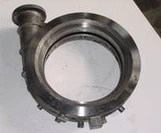
At our company, we offer a wide range of Super Alloy Casting products, including Super Alloy Casting Pump Body. Our products are manufactured using advanced alloy composition design, state - of - the - art casting techniques, and strict quality control measures. We are committed to providing high - quality super alloy castings with excellent oxidation resistance to meet the diverse needs of our customers.
Conclusion
Improving the oxidation resistance of super alloy castings is a multi - faceted challenge that requires a comprehensive approach. By optimizing the alloy composition, applying appropriate surface treatments, using proper heat treatment, and controlling the casting process, we can significantly enhance the oxidation resistance of these high - performance materials. As a supplier of super alloy castings, we are constantly researching and developing new technologies to improve the quality and performance of our products.
If you are interested in our Super Alloy Casting products and would like to discuss your specific requirements, please feel free to contact us. We are eager to engage in procurement discussions and provide you with the best solutions for your applications.
References
- Sims, C. T., Stoloff, N. S., & Hagel, W. C. (1987). Superalloys II. Wiley.
- Meier, G. H., & Pettit, F. S. (2005). Oxidation of High - Temperature Alloys. ASM International.
- Schütze, M. (2000). High - Temperature Corrosion of Metals. Wiley - VCH.