Hey there! I'm a supplier of Super Alloy Casting, and I've been in this industry for quite a while. One question that often comes up from our customers is how to adjust the hardness of super alloy casting. Well, today, I'm gonna share some insights on this topic.
Understanding Super Alloy Casting
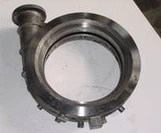
First off, let's talk a bit about what super alloy casting is. Super alloys are basically high - performance alloys that can withstand extreme conditions like high temperatures, corrosion, and stress. They're used in a wide range of applications, from aerospace components to Super Alloy Casting Pump Body in the oil and gas industry.
The hardness of super alloy casting is a crucial property. It affects the durability, wear resistance, and overall performance of the final product. So, getting the hardness just right is super important.
Factors Affecting the Hardness of Super Alloy Casting
There are several factors that can influence the hardness of super alloy casting. Let's take a closer look at them.
Chemical Composition
The chemical composition of the super alloy is the first and most important factor. Different elements in the alloy play different roles in determining its hardness. For example, elements like chromium, nickel, and molybdenum can enhance the hardness and strength of the alloy. By adjusting the amount of these elements in the alloy, we can control its hardness to a certain extent.
For instance, increasing the chromium content can improve the corrosion resistance and hardness of the super alloy. But we have to be careful not to overdo it because too much of certain elements can also lead to brittleness.
Heat Treatment
Heat treatment is another key factor. There are different types of heat treatment processes, such as annealing, quenching, and tempering.
Annealing is a process where the alloy is heated to a specific temperature and then slowly cooled. This helps to relieve internal stresses and make the alloy more ductile. On the other hand, quenching involves rapid cooling of the heated alloy. This can significantly increase the hardness of the super alloy, but it may also make it more brittle.
Tempering is often done after quenching. It involves reheating the quenched alloy to a lower temperature and then cooling it. Tempering can reduce the brittleness caused by quenching while still maintaining a relatively high hardness.
Cooling Rate
The cooling rate during the casting process also affects the hardness. A faster cooling rate generally leads to a higher hardness. When the alloy cools quickly, the atoms in the alloy don't have enough time to arrange themselves in an orderly manner, resulting in a more disordered structure that is harder.


However, a very fast cooling rate can cause cracking in the casting due to the high internal stresses. So, we need to find a balance between achieving the desired hardness and avoiding casting defects.
Methods to Adjust the Hardness of Super Alloy Casting
Adjusting Chemical Composition
As I mentioned earlier, changing the chemical composition is a fundamental way to adjust the hardness. We can work with our customers to design the alloy composition based on their specific requirements. For example, if a customer needs a super alloy casting with high hardness for a wear - resistant application, we can increase the content of hardening elements like tungsten and vanadium.
But this process requires careful consideration and precise control. We use advanced analytical techniques to ensure the accurate measurement and adjustment of the chemical composition.
Optimizing Heat Treatment Processes
Heat treatment is a powerful tool for adjusting hardness. We can customize the heat treatment parameters according to the type of super alloy and the desired hardness.
For example, if we want to achieve a medium - hardness super alloy casting, we might choose a combination of quenching and tempering. First, we quench the casting at a specific temperature and cooling rate to increase its hardness. Then, we temper it at a suitable temperature for a certain period of time to reduce brittleness.
We also conduct extensive testing to optimize the heat treatment processes. This includes hardness testing, microstructure analysis, and mechanical property testing.
Controlling Cooling Rate
Controlling the cooling rate during casting is also an effective method. We can use different casting techniques and cooling media to achieve the desired cooling rate.
For example, using a water - based cooling medium can result in a faster cooling rate compared to air cooling. But we need to be cautious because water cooling can also cause thermal shock and cracking. So, we may use a combination of different cooling methods, such as pre - cooling in air and then final cooling in water, to balance the cooling rate and avoid defects.
Case Studies
Let me share a couple of case studies to illustrate how we've adjusted the hardness of super alloy casting for our customers.
Case 1: Aerospace Component
One of our customers in the aerospace industry needed a super alloy casting for a turbine blade. They required a high - hardness casting to withstand the high - speed rotation and extreme temperatures in the turbine.
We first analyzed the application requirements and designed an alloy composition with a relatively high content of nickel, chromium, and tungsten. Then, we used a quenching and tempering heat treatment process. The casting was quenched in oil to achieve a high initial hardness and then tempered at a moderate temperature to reduce brittleness.
After the heat treatment, the hardness of the casting met the customer's requirements, and the component passed all the performance tests.
Case 2: Pump Body
Another customer needed a Super Alloy Casting Pump Body with good wear resistance and medium hardness. We adjusted the chemical composition by slightly increasing the molybdenum content.
For the heat treatment, we used a slower cooling rate during casting and then a mild annealing process. This resulted in a pump body with the desired hardness and excellent corrosion resistance.
Conclusion
Adjusting the hardness of super alloy casting is a complex but achievable task. By understanding the factors that affect hardness and using the right methods, we can produce super alloy castings that meet the diverse needs of our customers.
If you're in the market for super alloy casting and have specific hardness requirements, we'd love to work with you. We have the expertise and experience to provide you with high - quality super alloy castings tailored to your needs. Just reach out to us, and let's start a conversation about your project.
References
- "Superalloys: Fundamentals and Applications" by Robert C. Reed
- "Heat Treatment of Metals" by George E. Totten
- "Casting Processes and Quality Control" by John Campbell